
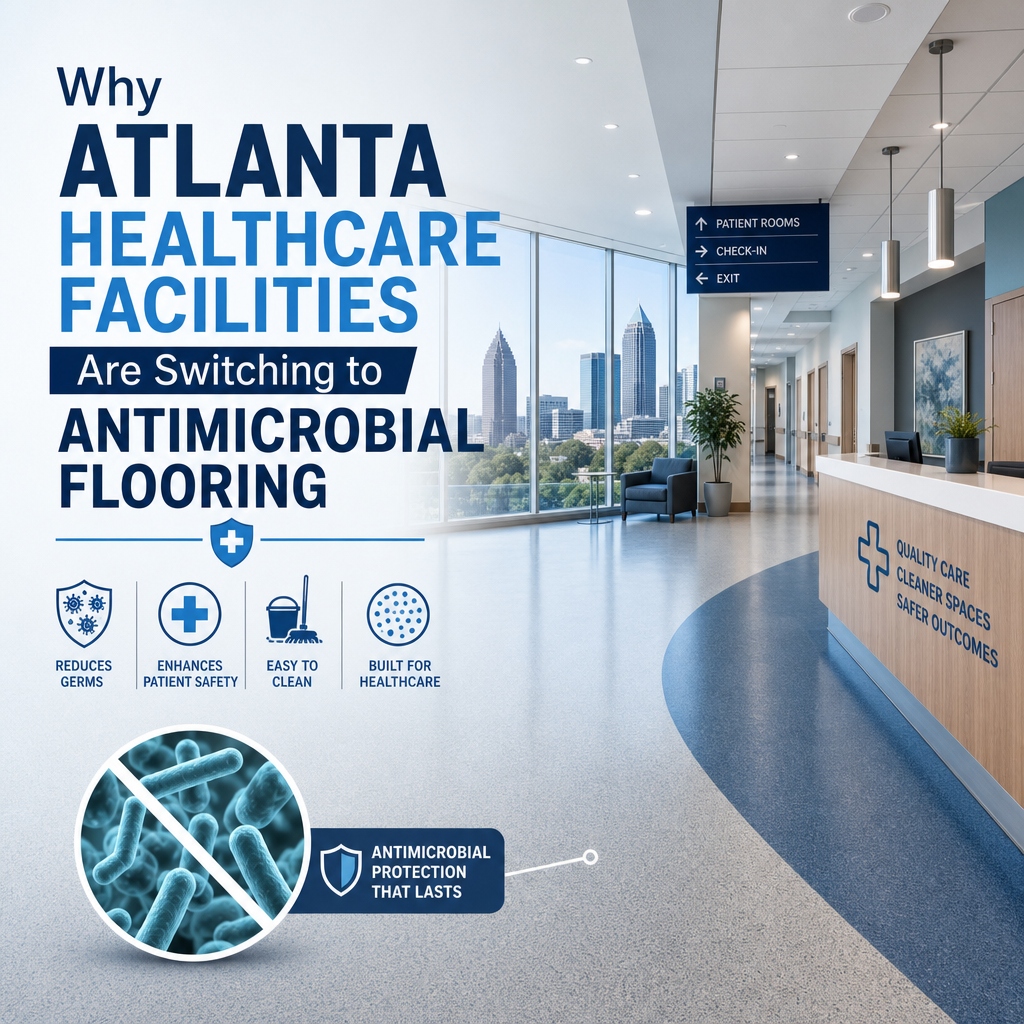
Why Atlanta Healthcare Facilities Are Switching to Antimicrobial Flooring
Why Healthcare Facilities in Atlanta Are Switching to Antimicrobial Flooring
Healthcare facilities in Atlanta are under constant pressure to improve safety, reduce infection risks, and maintain a clean, professional environment. One of the biggest upgrades many hospitals, clinics, dental offices, and outpatient centers are making is the move to antimicrobial flooring.
This shift is not just about appearance. It is about creating spaces that support better hygiene, easier maintenance, and long-term durability in high-traffic medical settings.
What Is Antimicrobial Flooring?
Antimicrobial flooring is designed to help inhibit the growth of bacteria, mold, and other microbes on the surface of the floor. While it does not replace cleaning and disinfecting, it adds an extra layer of protection in environments where cleanliness is critical.
In healthcare settings, this matters a lot. Floors can easily collect spills, dirt, and contaminants from foot traffic, wheelchairs, carts, and medical equipment. A flooring material with antimicrobial properties helps reduce the chance of harmful organisms lingering on the surface.
Why Atlanta Healthcare Facilities Are Making the Switch
1. Infection control is a top priority
Hospitals and clinics deal with vulnerable patients every day. From emergency rooms to exam rooms, infection prevention is always a concern. Antimicrobial flooring supports these efforts by helping create a cleaner environment and reducing microbial buildup.

In a city like Atlanta, where healthcare facilities serve a large and diverse population, this added protection can make a meaningful difference in day-to-day operations.
2. Easy cleaning saves time and labor
Healthcare floors need frequent cleaning, and that can be both time-consuming and costly. Antimicrobial flooring is often made from smooth, nonporous materials that are easier to sanitize than traditional flooring options.
This offers several benefits:
- Faster routine cleaning
- Less scrubbing required
- Reduced chance of stains and residue
- Better performance with disinfectants
For busy healthcare teams, these time savings can add up quickly.
3. Durability matters in high-traffic spaces
Medical facilities experience heavy daily use. Patients, staff, visitors, and equipment all create wear and tear. Floors in these environments need to stand up to constant traffic without breaking down.
Antimicrobial flooring is typically built for durability. It resists scratching, moisture damage, and many common cleaning chemicals. That means facilities can maintain a polished look while avoiding frequent repairs or replacement.
4. It helps support a professional image
First impressions matter in healthcare. A clean, well-maintained facility helps patients feel more comfortable and confident in the care they are receiving. Flooring plays a bigger role in that impression than many people realize.
Worn, stained, or damaged floors can make even a modern facility feel outdated. Antimicrobial flooring offers a cleaner appearance and a more polished finish, which helps reinforce trust and professionalism.
Best Areas for Antimicrobial Flooring in Healthcare
Not every part of a facility has the same flooring needs, but antimicrobial flooring can be especially useful in areas such as:
- Patient rooms
- Exam rooms
- Operating areas
- Waiting rooms
- Hallways
- Labs
- Restrooms
- Nurse stations
These areas often experience high traffic and frequent exposure to spills, moisture, and contaminants. Choosing the right flooring in these spaces can improve both function and safety.
Common Flooring Materials Used
Several flooring types can be manufactured with antimicrobial properties. Healthcare facilities in Atlanta often consider options like:
Vinyl composition flooring
This is a popular choice because it is durable, affordable, and easy to maintain. It can also be made with seamless or low-seam installation to reduce places where germs can collect.
Luxury vinyl tile
Luxury vinyl tile offers a cleaner look while still providing practical performance. It is resistant to moisture and can be designed with antimicrobial protection for healthcare use.
Rubber flooring
Rubber flooring is valued for comfort underfoot, slip resistance, and durability. In some healthcare areas, it can be a smart choice where staff spend long hours standing.
Seamless resin flooring
For spaces that need maximum sanitation, seamless resin systems are often selected. They create a smooth, nonporous surface that is easy to disinfect and less likely to harbor contaminants.
Why Atlanta’s Climate Also Plays a Role
Atlanta’s humid climate can create additional flooring challenges. Moisture control is important in any healthcare setting, and excess humidity can make some flooring materials more vulnerable to mold, mildew, or deterioration.
Antimicrobial flooring helps address some of these concerns by offering better resistance to moisture-related issues. That makes it a practical choice for facilities that need both cleanliness and long-term performance in a humid environment.
A Smart Investment for the Future
Switching to antimicrobial flooring is not just a short-term upgrade. It is a long-term investment in safety, efficiency, and facility quality. For healthcare providers in Atlanta, the benefits often extend beyond infection control.
They also include:
- Lower maintenance demands
- Better durability
- Improved patient confidence
- A cleaner overall appearance
- Better support for regulatory standards
As healthcare facilities continue looking for ways to improve operations, antimicrobial flooring is becoming a smart and practical solution.
Final Thoughts
Healthcare facilities in Atlanta are switching to antimicrobial flooring because it supports a cleaner, safer, and more efficient environment. With benefits like easier maintenance, stronger durability, and improved infection control, it is easy to see why this option is gaining momentum.
For hospitals, clinics, and other medical spaces that want flooring that works as hard as they do, antimicrobial flooring is proving to be a valuable choice.