Top Flooring Choices for Atlanta Schools and Universities
Top Flooring Choices for Atlanta Schools, Universities & Educational Buildings
Choosing the right flooring for a school or campus building is about more than looks. In busy educational spaces, floors need to handle heavy foot traffic, spills, noise, safety concerns, and long-term maintenance demands. For institutions in Georgia, the top flooring choices for Atlanta schools, universities & educational buildings also need to perform well in warm, humid weather and support a clean, welcoming environment.
Whether you’re planning a new build or upgrading an older facility, the right flooring can improve comfort, durability, and daily operations.
What Educational Flooring Needs to Deliver
Before selecting a material, it helps to think about how the space will be used. Classrooms, hallways, cafeterias, science labs, gyms, and administrative offices all have different needs.
Key priorities for school flooring
- Durability: Must handle constant use from students, staff, and visitors
- Safety: Slip resistance and impact support matter in busy settings
- Noise control: Quiet floors help reduce distraction in learning environments
- Easy maintenance: Schools need surfaces that clean quickly and last
- Budget efficiency: Materials should balance upfront cost with long-term value
- Moisture resistance: Especially important in Atlanta’s humid climate
With those factors in mind, here are the most effective options for educational facilities.
Luxury Vinyl Tile: A Versatile All-Purpose Choice
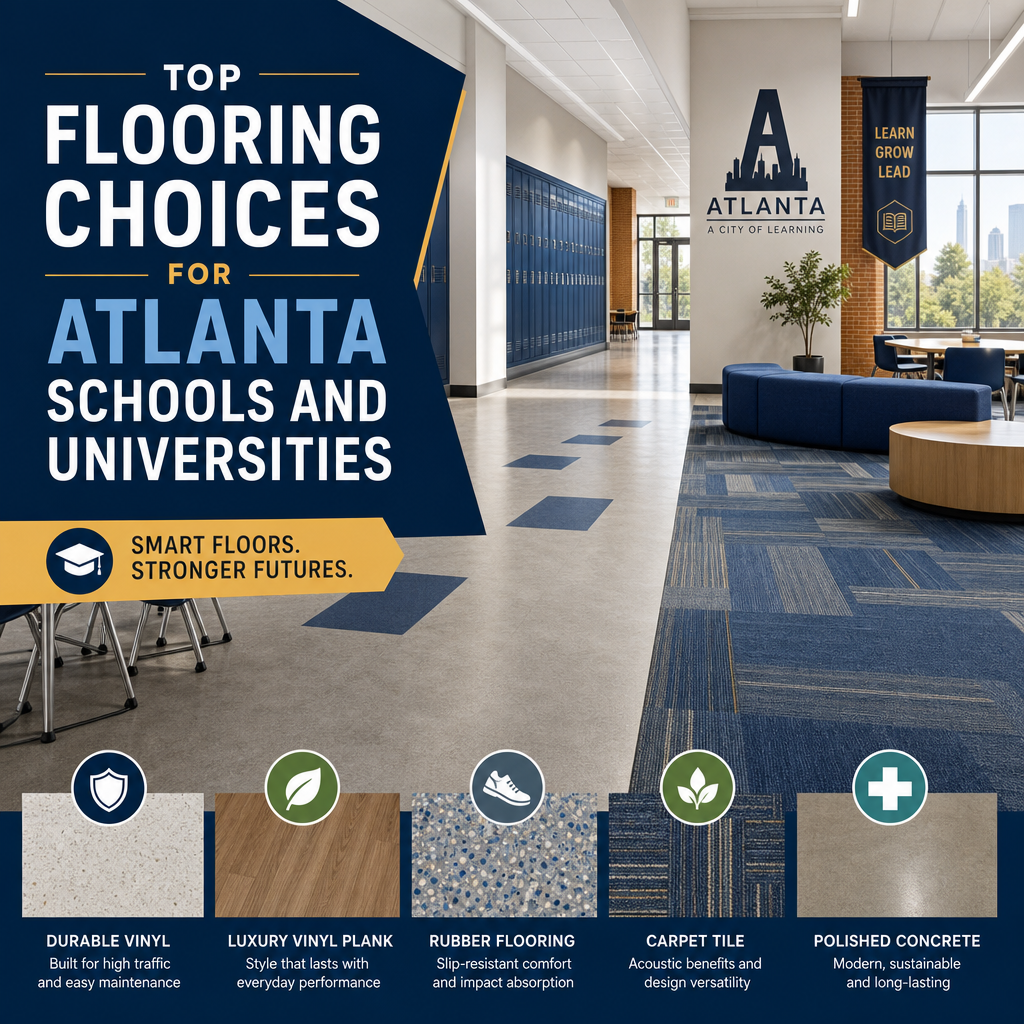
Luxury vinyl tile, often called LVT, is one of the most popular flooring solutions for schools and universities. It offers a practical mix of style, resilience, and easy maintenance.

Why LVT works well
LVT is tough enough for hallways and common areas, yet attractive enough for classrooms and offices. It can mimic wood, stone, or other finishes without the high cost or maintenance concerns of natural materials.
Benefits of LVT for schools
- Resists scratches and scuffs
- Handles heavy foot traffic
- Easy to clean and maintain
- Available in many colors and patterns
- Comfortable underfoot compared to harder surfaces
For Atlanta educational buildings, LVT is a strong choice because it performs well in climate-controlled interiors and supports a polished, professional look.
Carpet Tile: Best for Noise Reduction and Comfort
Carpet tile remains a smart option for classrooms, libraries, counseling offices, and administrative spaces where sound control is important.
Why schools use carpet tile
Unlike broadloom carpet, carpet tile is easy to replace in sections if damage occurs. That makes it a practical choice for high-use areas where spills or wear are common.
Advantages of carpet tile
- Reduces noise in busy learning spaces
- Creates a warmer, softer feel
- Supports design flexibility
- Allows simple replacement of damaged squares
- Can improve comfort for staff and students
Many Atlanta schools use carpet tile in areas where students spend long periods seated, since it helps create a calmer atmosphere.
Rubber Flooring: Ideal for Gyms, Corridors, and Safety-Focused Areas
Rubber flooring is a reliable option for environments that need grip, cushioning, and long-term durability. It’s especially useful in gyms, fitness rooms, stair landings, and some high-traffic walkways.
What makes rubber flooring effective
Rubber naturally absorbs impact and helps reduce slips. It also stands up well to active use, making it a favorite for athletic and recreational areas.
Rubber flooring benefits
- Excellent slip resistance
- Good shock absorption
- Durable under repeated use
- Low maintenance
- Helps reduce noise and vibration
For educational buildings in Atlanta, rubber flooring is especially valuable in spaces where safety is a top concern.
Polished Concrete: A Durable, Low-Maintenance Solution
Polished concrete is increasingly used in modern school and university buildings, especially in lobbies, hallways, cafeterias, and large common areas.
Why polished concrete stands out
This option offers a clean, contemporary look while remaining extremely durable. It can also be a cost-effective solution for large facilities that need a long-lasting surface.
Benefits of polished concrete
- Very durable
- Easy to clean
- Works well in large open spaces
- Can support modern design aesthetics
- Long lifespan with proper care
Because concrete is already common in many institutional buildings, polishing it can be a practical upgrade that reduces replacement costs over time.
Sheet Vinyl: Good for Labs, Clinics, and Restrooms
Sheet vinyl is another strong contender for Atlanta educational facilities, particularly in areas that require moisture resistance and simple sanitation.
Where sheet vinyl performs best
It works well in science labs, nurse’s offices, restrooms, and utility spaces. Its seamless installation helps limit places where dirt and moisture can collect.
Sheet vinyl advantages
- Water-resistant
- Easy to disinfect
- Seamless appearance
- Cost-effective for functional areas
- Available in many styles
For buildings that need reliable performance without a luxury price point, sheet vinyl is a practical choice.
Choosing the Right Floor for Each Space
Not every area in a school needs the same flooring. The best results come from matching the material to the room.
Suggested flooring by space
- Classrooms: Carpet tile or LVT
- Hallways: LVT, polished concrete, or rubber
- Cafeterias: Polished concrete or sheet vinyl
- Labs and restrooms: Sheet vinyl
- Gyms and athletic areas: Rubber flooring
- Offices and conference rooms: Carpet tile or LVT
This mixed-material approach helps educational buildings get the most value and performance from every square foot.
Final Thoughts
The top flooring choices for Atlanta schools, universities & educational buildings are the ones that balance durability, safety, comfort, and easy maintenance. LVT, carpet tile, rubber flooring, polished concrete, and sheet vinyl each serve different needs, making them excellent options for modern campuses.
By choosing materials based on function and long-term performance, schools and universities can create spaces that support learning, reduce maintenance headaches, and hold up well in Atlanta’s demanding environment.