
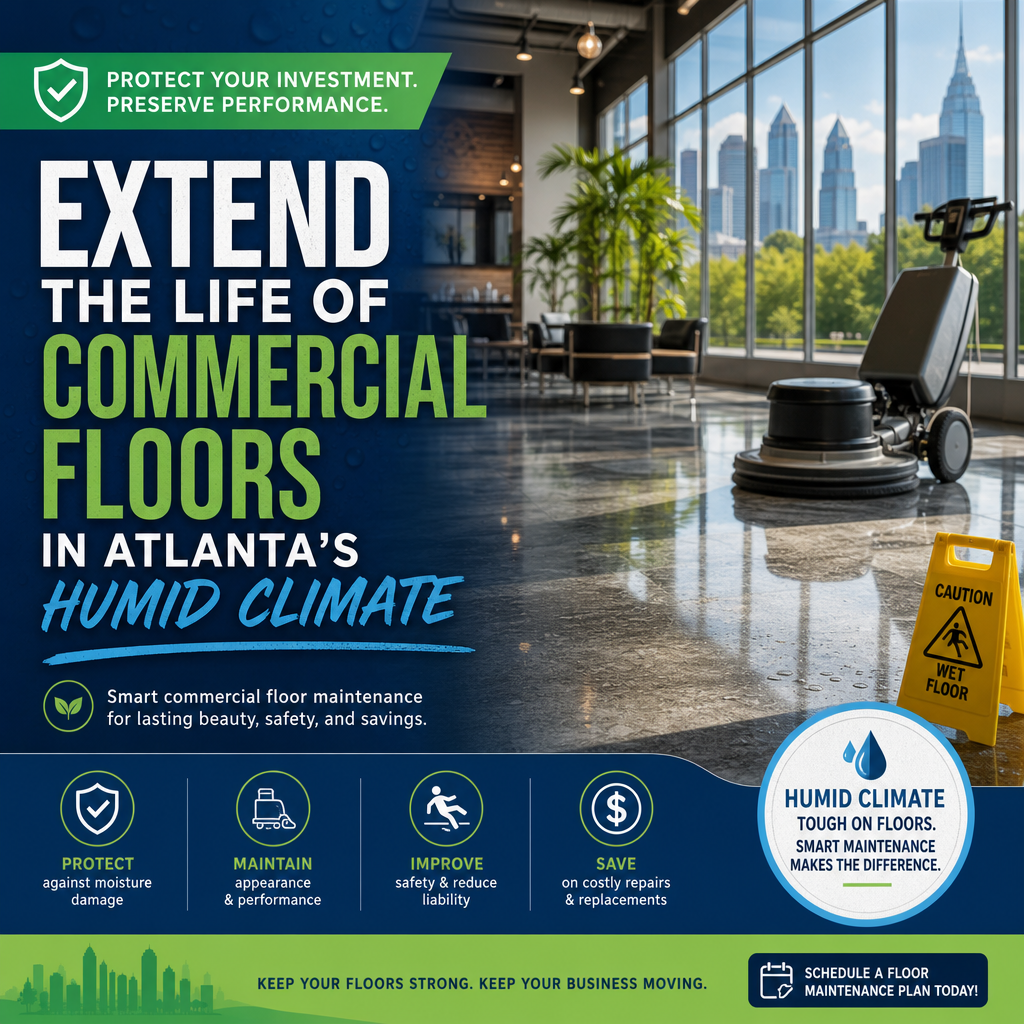
Extend the Life of Commercial Floors in Atlanta’s Humid Climate
How to Extend the Life of Your Commercial Floors in Atlanta’s Humid Climate
Atlanta’s warm, humid weather can be tough on commercial flooring. Moisture in the air, frequent rain, and heavy foot traffic all work together to wear down surfaces faster than many business owners expect. If you want to extend the life of your commercial floors in Atlanta’s humid climate, the key is consistent care, moisture control, and the right maintenance plan.
Whether your property has tile, vinyl, hardwood, concrete, or carpet, a few smart practices can help protect your investment and keep your floors looking professional longer.
Why Humidity Is Hard on Commercial Floors
Humidity affects flooring in different ways depending on the material, but the biggest problem is moisture. When indoor and outdoor moisture levels stay high, floors can expand, warp, slip, stain, or lose their finish.
Common issues in Atlanta businesses include:
- Buckling or swelling in wood floors
- Mold or mildew growth under carpet and along baseboards
- Slippery surfaces from condensation
- Breakdown of adhesives in vinyl and laminate
- Dull finishes from repeated exposure to moisture and dirt
The more traffic your building sees, the faster these problems can develop. That’s why prevention matters just as much as cleaning.
Control Moisture at the Door
The easiest way to protect floors is to stop moisture before it spreads through the building. In Atlanta, this means paying close attention to entrances.
Use high-quality mats
Place heavy-duty mats outside and inside every entrance. These should trap dirt, water, and debris before they reach the floor. Make sure they are long enough for people to take several steps across them.
Keep mats clean and dry
A wet mat can do more harm than good. Replace or clean mats regularly so they continue absorbing moisture instead of holding it against the floor.
Add umbrella stands and drying stations
During rainy seasons, simple additions like umbrella stands and hand-drying stations help reduce puddles and water drips near entryways.
Choose Flooring That Matches the Environment
Not every flooring material performs equally well in a humid climate. If you are installing new flooring or replacing old surfaces, choose materials that can stand up to moisture and traffic.
Best options for humid commercial spaces
- Luxury vinyl tile (LVT): Durable, water-resistant, and easy to maintain
- Tile: Great for moisture-prone areas and easy to sanitize
- Concrete with proper sealant: Strong and low-maintenance for warehouses or retail spaces
- Commercial-grade carpet tiles: Easier to replace individually if damage occurs
If your business already has wood or laminate, be extra careful with moisture control and finish maintenance.
Keep a Consistent Cleaning Schedule
Dirt and moisture are a damaging combination. When grime gets ground into flooring, it acts like sandpaper, wearing away the surface faster.
A good cleaning routine should include:
- Daily sweeping or vacuuming
- Prompt spill cleanup
- Damp mopping with the correct cleaner for the floor type
- Routine deep cleaning based on traffic levels
Avoid using too much water. In humid conditions, excess moisture takes longer to evaporate and can seep into seams or edges. Always use cleaning products recommended for your flooring material.
Protect Floors With Proper Maintenance
Routine maintenance helps stop small problems from becoming expensive repairs. In a humid climate, finishing and sealing are especially important.
Recoat or reseal when needed
Protective coatings wear down over time. Refinishing hardwood, resealing concrete, or refreshing tile grout can help block moisture and extend surface life.
Inspect for early signs of damage
Look for:
- Cracks
- Lifting edges
- Stains
- Soft spots
- Discoloration
- Loose tiles or planks
Addressing these issues early can prevent widespread damage.
Schedule professional floor care
Professional cleaning and maintenance services can remove embedded dirt, restore shine, and apply protective treatments that are more effective than standard cleaning alone. For many businesses, this is one of the best ways to extend the life of your commercial floors in Atlanta’s humid climate.
Manage Indoor Humidity Levels
Floor care does not stop at surface cleaning. Indoor air quality plays a big role in floor performance.
Use HVAC systems, dehumidifiers, and proper ventilation to keep indoor humidity in a safe range. This is especially important in:
- Entryways
- Restrooms
- Kitchens
- Storage rooms
- Basements and lower levels
When indoor humidity stays under control, floors are less likely to warp, mildew, or weaken.
Train Staff on Floor Protection
Employees can help preserve your flooring when they know what to do. A quick training session can prevent common mistakes that lead to damage.
Make sure staff know to:
- Clean spills immediately
- Report damaged areas right away
- Avoid dragging furniture or equipment
- Use approved cleaning products only
- Keep entry mats in place
These small habits can make a big difference over time.
Final Thoughts
Atlanta’s humidity creates real challenges for commercial flooring, but damage is not inevitable. With moisture control, regular cleaning, proper materials, and routine maintenance, you can protect your investment and keep your business looking polished.
If you want to extend the life of your commercial floors in Atlanta’s humid climate, focus on prevention first. A little care each day can add years to the life of your floors and help you avoid costly repairs later.