

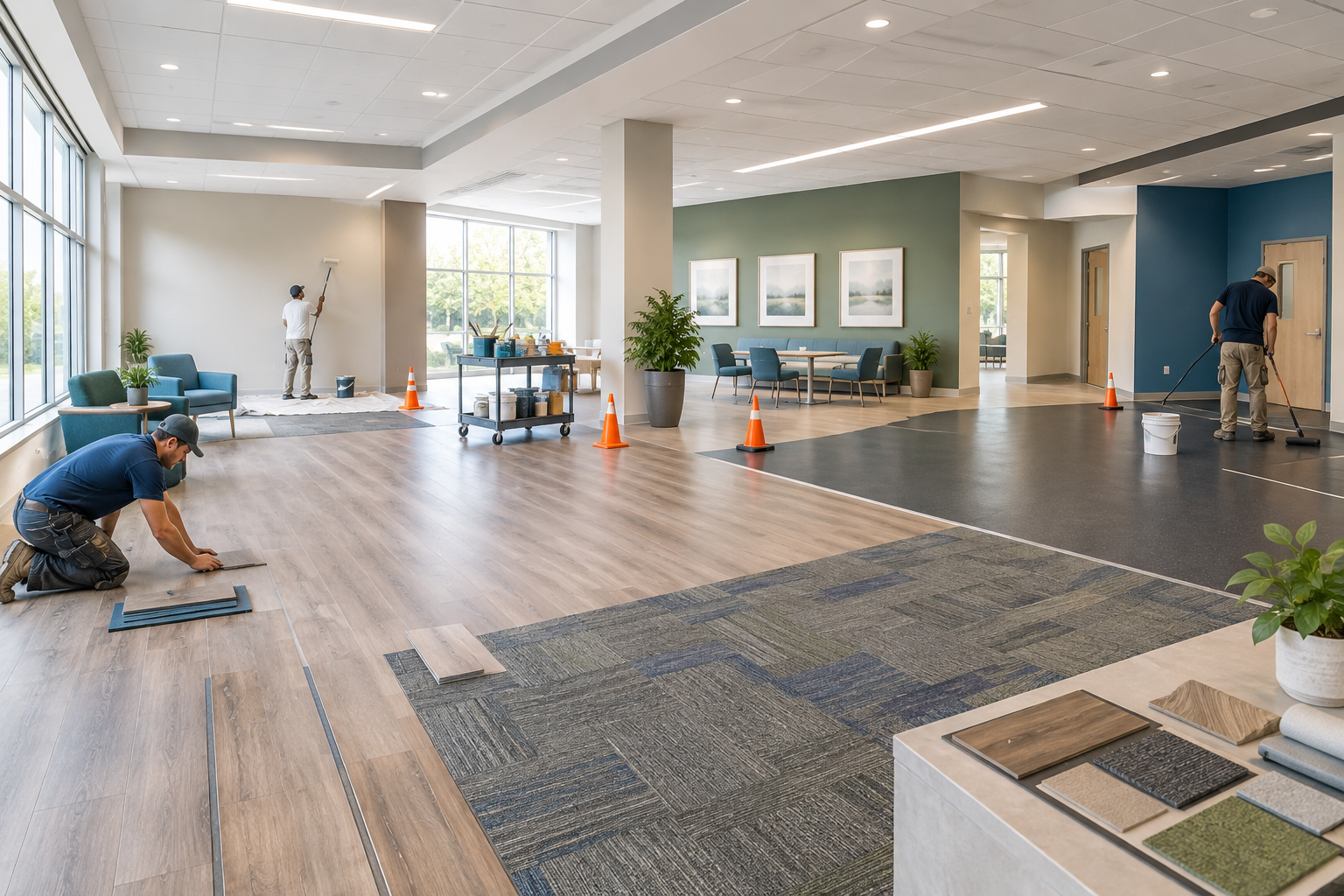
New Floors. Fresh Paint. Better Business.
Introduction
New Floors. Fresh Paint. Better Business. For Atlanta Commercial Flooring, transforming a commercial space is more than aesthetics — it’s about creating durable, low-maintenance environments that support operations and elevate customer perception. This guide walks facility managers and business owners through commercial flooring installation, interior and exterior painting, and coordinated refresh packages designed for offices, fitness clubs, senior communities, medical facilities, and educational buildings.
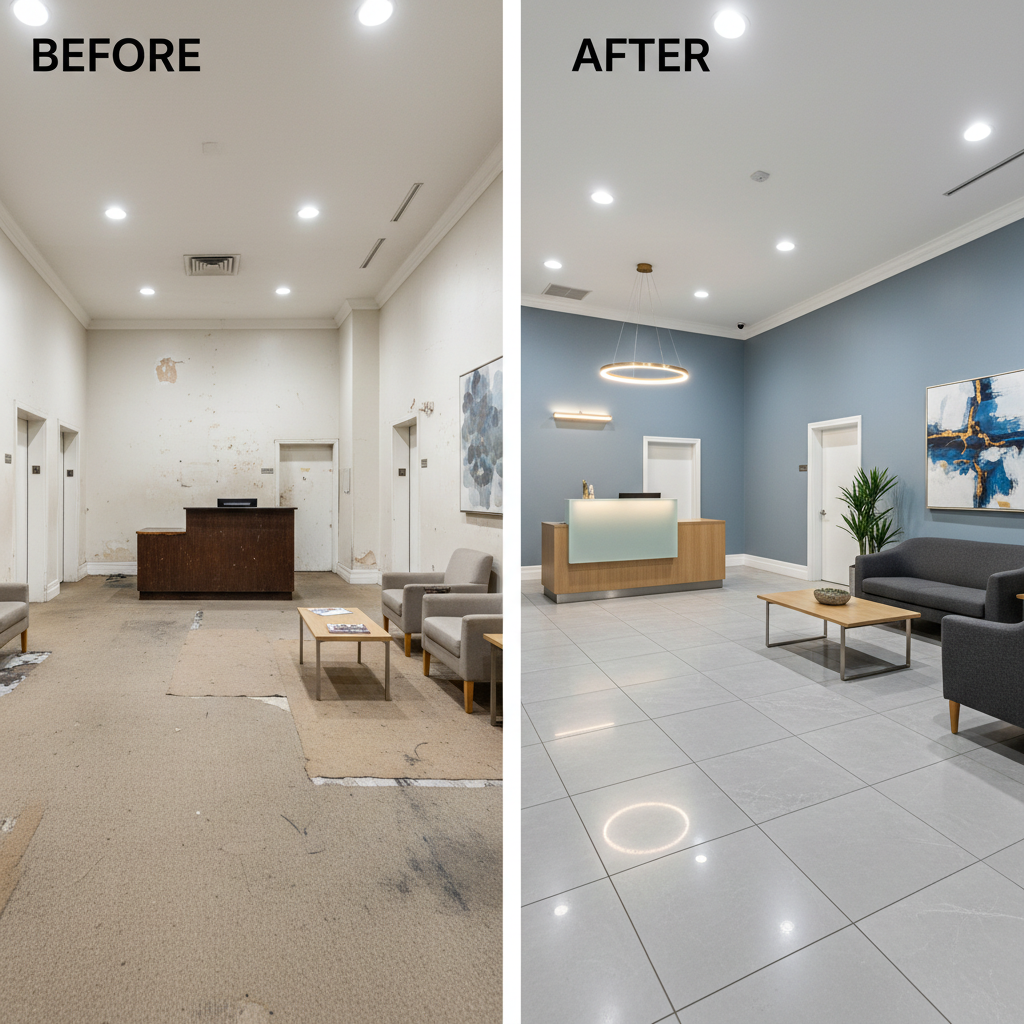
Why Coordinate Flooring and Painting?
Coordinated renovations maximize visual impact while minimizing disruption. When flooring and paint are selected and scheduled together, timelines shorten, finish quality improves, and you avoid mismatched styles that can undermine your brand. A unified approach ensures color palettes, materials, and slip-resistance levels complement each other for both safety and style.
Benefits at a glance
- Improved first impressions and consistent branding.
- Single-point scheduling reduces downtime and labor overlap.
- Fewer touch-ups later because contractors work to a common spec.
- Streamlined maintenance with coordinated material choices.
Commercial Flooring Installation: Choosing the Right Materials
Different facility types have different performance needs. Selecting the right floor material balances durability, maintenance, acoustics, and comfort.
Material recommendations by facility
- Offices: resilient vinyl planks or carpet tiles for sound control and repairability.
- Fitness clubs: rubber or high-impact vinyl for shock absorption and traction.
- Senior communities: low-profile resilient flooring with anti-slip finishes for safety.
- Medical facilities: seamless sheet vinyl or epoxy for infection control and cleanability.
- Educational buildings: durable tile or rubber in high-traffic corridors and modular carpet in classrooms.
When planning, ask your contractor about material maintenance routines and lifecycle considerations. Also, keep project identifiers handy — many job orders reference IDs like 364, 560, 439, 563, and 564 for tracking phased work and procurement.
Interior and Exterior Painting: Practical Advice
Good paint work refreshes a space, protects surfaces, and improves light reflectance. For interiors, choose low-VOC paints where occupant health and indoor air quality matter. For exteriors, pick coatings formulated for weather resistance and surface flexibility.

Key painting tips
- Prep thoroughly: patching, priming, and cleaning increase longevity.
- Match sheen to use: eggshell in offices, semi-gloss in high-touch areas, and flat on ceilings.
- Use color strategically: lighter tones increase perceived space, accent walls guide circulation.
- Schedule exterior work in dry conditions and plan for curing times.
Refresh Packages: One Contractor, Less Hassle
Many commercial contractors offer bundled flooring-and-paint packages. These refresh packages typically cover assessment, material selection, phased installation, and final walkthroughs. Bundles reduce administrative burden and create consistent results across spaces.
What to expect in a package
- Site assessment and scope documentation.
- Material samples and color mock-ups for approval.
- Phased scheduling to minimize business interruption.
- Final cleaning and touch-up inspection.
Maintenance and Longevity
Durable materials and sound painting practices reduce long-term costs. Establish simple maintenance routines: regular cleaning for floors, quick spot repairs for painted surfaces, and an annual inspection to catch wear early. For high-traffic areas, choose materials rated for frequent cleaning and easy replacement of modular components.
Practical Scheduling and Contractor Selection
Plan projects during lower-occupancy periods, communicate clearly with tenants, and request detailed timelines. When vetting contractors, review portfolios across building types — offices, fitness clubs, senior communities, medical facilities, and schools — and ask for references. Confirm they can coordinate painting and flooring work to avoid scope gaps.
Final Thoughts
A coordinated flooring and painting refresh transforms appearance, improves safety, and supports efficient maintenance routines. Whether you manage a small office or a large medical campus, thoughtful material choices and integrated scheduling deliver the biggest return on your renovation effort.
If you’re ready to upgrade your space, request a free commercial project estimate from Roberts Commercial Flooring.