

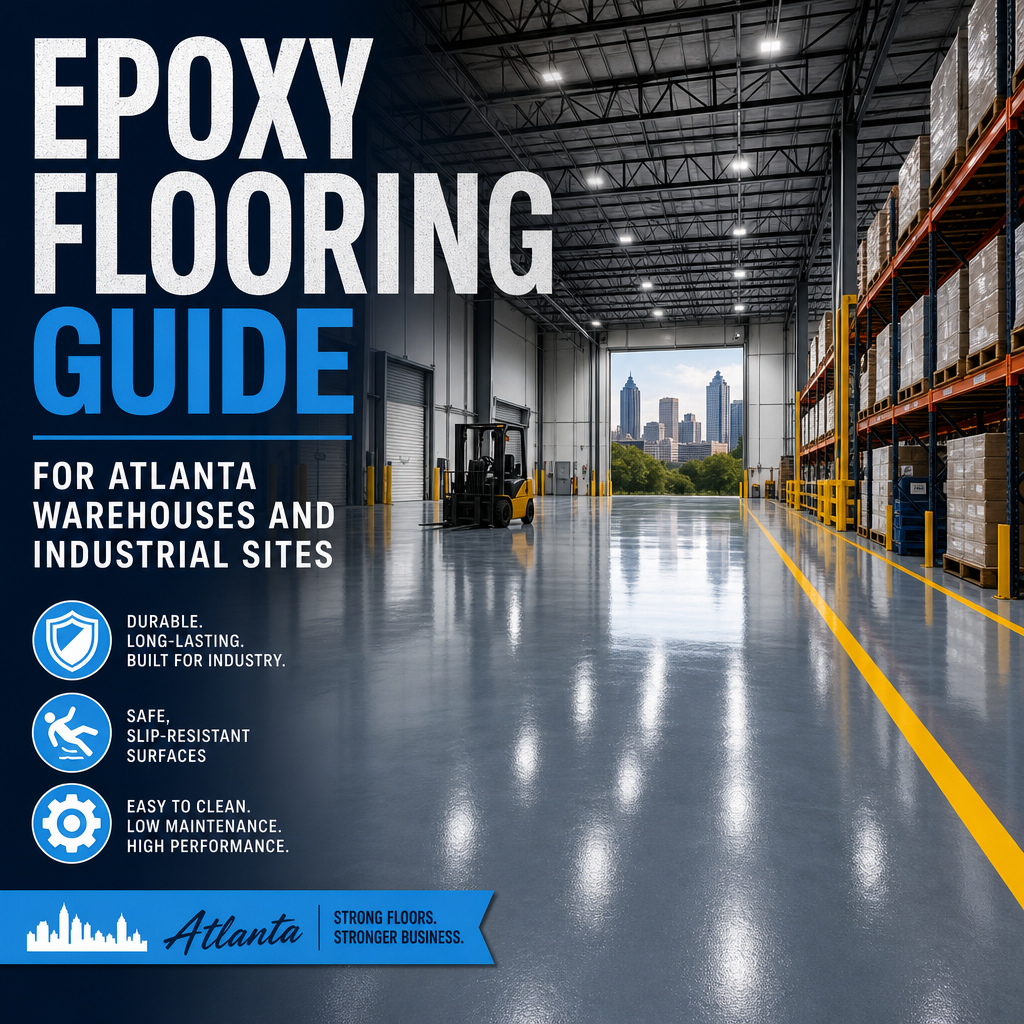
Epoxy Flooring Guide for Atlanta Warehouses and Industrial Sites
The Ultimate Guide to Epoxy Flooring for Atlanta Warehouses & Industrial Sites
In busy industrial environments, floors do far more than support foot traffic. They must handle forklifts, heavy equipment, chemical spills, constant movement, and daily wear. That’s why epoxy flooring for Atlanta warehouses & industrial sites has become a top choice for facility managers who need durability, safety, and long-term value.
Atlanta’s warehouse and industrial sectors are growing fast, and with that growth comes a bigger need for flooring systems that can keep up. Epoxy flooring offers a practical, high-performance solution designed to meet the demands of modern operations.
What Is Epoxy Flooring?
Epoxy flooring is a resin-based coating applied over concrete to create a strong, seamless surface. Once cured, it forms a hard protective layer that bonds tightly to the floor beneath it.
Unlike bare concrete, epoxy resists stains, impacts, moisture, and many types of chemicals. It also creates a smooth finish that can be customized for safety, visibility, and branding.
For warehouses and industrial sites, this means a floor that works harder and lasts longer.

Why Atlanta Warehouses Need Epoxy Flooring
Atlanta’s climate brings hot summers, humidity, and occasional temperature swings. These conditions can affect concrete floors over time, especially in facilities with constant activity.
Epoxy flooring helps by adding a protective barrier that reduces damage from moisture and daily use. It also improves the appearance of the space, which matters in facilities that welcome vendors, clients, or inspectors.
Key benefits include:
- Durability: Withstands heavy machinery, pallet jacks, and forklift traffic
- Chemical resistance: Handles oil, cleaning agents, and industrial substances
- Easy maintenance: Smooth surface makes cleaning faster and simpler
- Safety improvements: Can include slip-resistant textures and line striping
- Professional appearance: Gives warehouses and industrial spaces a cleaner, more organized look
Best Applications for Industrial Sites
Epoxy flooring is versatile enough for many types of facilities. In Atlanta, it is commonly used in:
- Warehouses and distribution centers
- Manufacturing plants
- Automotive service shops
- Logistics hubs
- Food processing facilities
- Aircraft hangars
- Storage and fulfillment centers
Each of these environments benefits from a floor that resists damage while supporting efficient operations.
Types of Epoxy Flooring Systems
Not every industrial space needs the same epoxy solution. The best system depends on traffic levels, chemical exposure, and performance goals.
Standard Epoxy Coatings
A cost-effective choice for light to moderate traffic areas. These coatings provide basic protection and a clean finish.
Self-Leveling Epoxy
Ideal for uneven concrete floors, this option creates a smooth, seamless surface with added strength.
Mortar Epoxy
One of the most durable systems available, mortar epoxy is built for extreme impact and heavy equipment use.
Epoxy With Anti-Slip Additives
Perfect for areas where safety is a priority. These systems add texture to reduce slip risks in wet or high-traffic zones.
What to Consider Before Installation
Before installing epoxy flooring, it’s important to evaluate the condition of the concrete and the demands of the facility. A proper installation starts with preparation.
Important factors include:
- Concrete condition: Cracks, moisture, and surface damage must be addressed first
- Traffic level: Forklift routes and loading areas may need higher-performance systems
- Chemical exposure: Choose an epoxy formulation that can resist the substances used in the facility
- Downtime: Plan installation during a shutdown or low-activity period
- Safety needs: Consider anti-slip features, color coding, and line markings
Skipping these steps can lead to adhesion problems, bubbling, or premature wear.
The Installation Process
A quality epoxy floor depends on careful preparation and professional application. While the exact process may vary, most projects include these steps:
- Surface cleaning and grinding
- Repairing cracks or damaged concrete
- Moisture testing
- Primer application
- Epoxy coating installation
- Optional topcoat or safety finish
- Curing time before full use
Proper curing is essential. Rushing the process can weaken the bond and reduce the floor’s lifespan.
Maintenance Tips for Long-Term Performance
One of the biggest advantages of epoxy flooring is that it is easy to maintain. Still, a few simple habits can help extend its life.
Maintenance best practices:
- Sweep or dust mop regularly to remove debris
- Clean spills quickly to prevent residue buildup
- Use non-abrasive cleaners
- Inspect high-traffic areas for wear
- Avoid dragging sharp objects across the surface
With regular care, a quality epoxy floor can perform well for many years.
Is Epoxy Flooring Worth It?
For most Atlanta warehouses and industrial sites, the answer is yes. Epoxy flooring offers a strong return on investment by reducing maintenance costs, improving safety, and extending the life of the concrete beneath it.
It also supports better workflow. Clear aisle markings, brighter surfaces, and easier cleanup all contribute to a more efficient operation.
Final Thoughts
When your facility needs a floor that can handle demanding conditions, epoxy is a smart and reliable option. Epoxy flooring for Atlanta warehouses & industrial sites provides the strength, safety, and appearance needed to support fast-moving industrial operations.
From heavy-duty manufacturing spaces to high-traffic distribution centers, the right epoxy system can make a lasting difference in performance and productivity.