

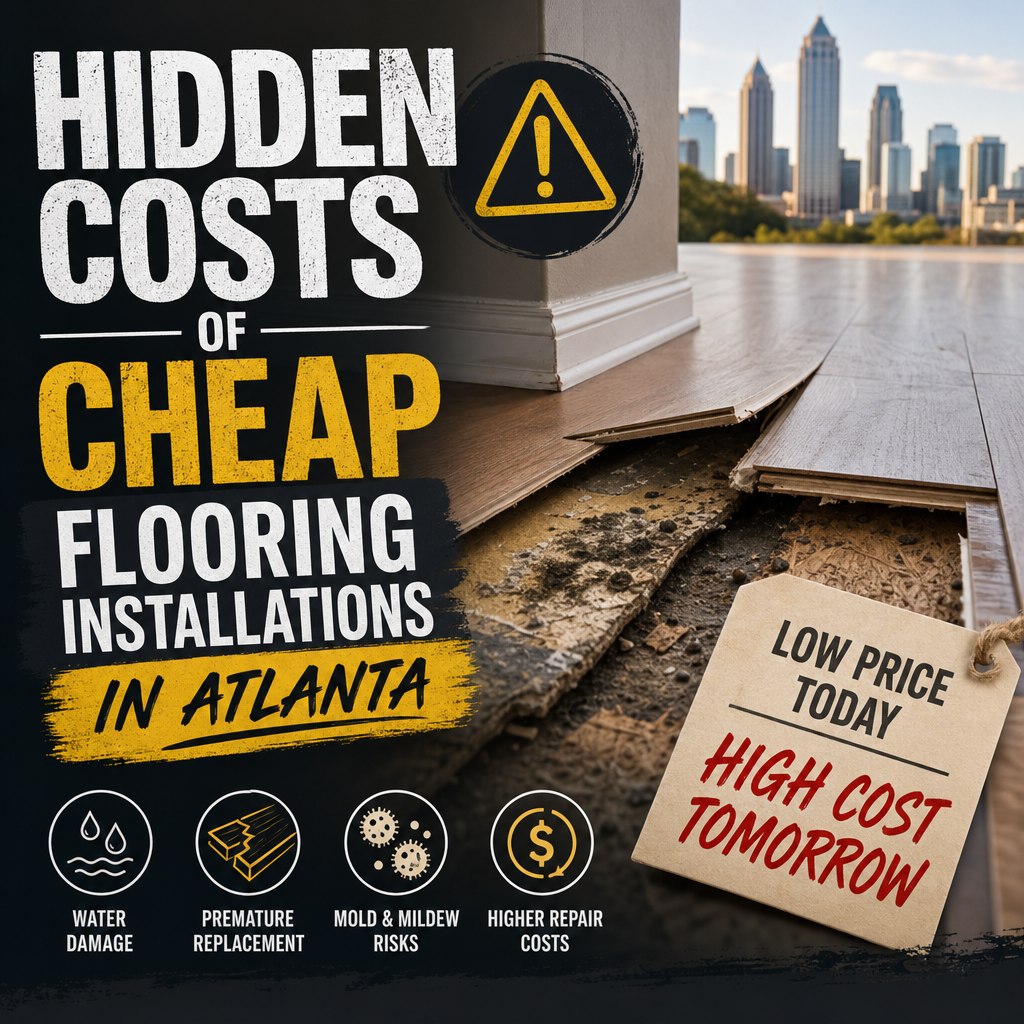
Hidden Costs of Cheap Flooring Installations in Atlanta
The Hidden Costs of Cheap Flooring Installations in Atlanta
When shopping for new floors, it’s easy to focus on the lowest quote. After all, flooring can be a major expense, and a cheaper installation sounds like a smart way to save money. But in many cases, cheap flooring installations in Atlanta come with hidden costs that show up later in repairs, replacement, stress, and lost time.
Atlanta homeowners deal with a mix of humidity, seasonal temperature changes, and busy household traffic. Those conditions make quality flooring installation especially important. A bargain price may look appealing at first, but the long-term consequences can far outweigh the upfront savings.
Why the Lowest Bid Isn’t Always the Best Deal
A low price often means something has been cut from the process. That could be cheaper materials, rushed labor, limited prep work, or a lack of proper warranties. In flooring, small mistakes during installation can create big problems down the road.
Some common shortcuts include:
- Skipping subfloor inspection
- Using low-grade adhesive or underlayment
- Failing to acclimate flooring materials properly
- Rushing measurements and cuts
- Leaving gaps, uneven edges, or weak seams
At first, these issues may not seem serious. But over time, they can lead to squeaking, buckling, water damage, and premature wear.

The Cost of Poor Preparation
One of the biggest hidden expenses comes before the flooring is even installed. Proper preparation takes time, and budget installers may try to avoid it.
Subfloor Problems
If the subfloor is uneven, damaged, or damp, the new flooring won’t sit correctly. That can cause movement, creaking, and visible imperfections. In some cases, the floor may start separating or cracking within months.
Repairing subfloor issues after installation is far more expensive than fixing them beforehand.
Moisture Concerns in Atlanta Homes
Atlanta’s climate can bring humidity that affects certain flooring materials, especially hardwood and laminate. Without proper moisture testing and acclimation, floors may expand, warp, or gap.
A cheap installer may ignore these steps to save time. The result? You may end up paying for a full replacement much sooner than expected.
Hidden Labor Costs Add Up
Cheap flooring installation often means cheaper labor, but that doesn’t always mean better value. Inexperienced or underqualified installers may take longer, make more mistakes, or leave behind unfinished details.
Problems You May Not Notice Right Away
Some installation defects are subtle at first. You might not see them until weeks later, when:
- Planks begin shifting
- Tiles loosen or crack
- Edges lift
- Transitions look uneven
- Baseboards and trim don’t line up
Once these issues appear, fixing them can be disruptive and expensive. In many cases, it requires removing sections of the floor and reinstalling them correctly.
Reduced Lifespan
Even if the floor looks fine initially, poor installation shortens its lifespan. That means you’ll replace the floor years earlier than you should have to. A floor that should last 15 to 20 years may need major work much sooner.
Material Waste and Replacement Costs
Budget flooring jobs sometimes use low-quality materials that wear out quickly. Others use good materials but waste them during installation because of poor planning or inexperience.
That waste creates hidden costs in two ways:
- You pay for extra materials that were not used efficiently.
- You may need replacement sooner because the installation failed.
This is especially frustrating with hardwood, luxury vinyl plank, and tile, where quality installation matters just as much as the product itself.
How Cheap Installation Can Affect Your Home Value
Floors are one of the first things buyers notice. A poorly installed floor can make an entire home feel neglected, even if the rest of the space is well maintained.
Visible issues such as uneven boards, cracked tile, or sloppy transitions can lower buyer confidence. If you plan to sell your home in the future, a cheap flooring job may hurt resale value more than you expect.
In competitive Atlanta neighborhoods, presentation matters. A floor that looks rushed or poorly finished can become a negotiation point and reduce offers.
Signs You’re Getting a Low-Quality Flooring Job
Before hiring a contractor, watch for warning signs that the quote may be too good to be true.
Red Flags to Avoid
- No written estimate
- No mention of prep work
- Vague material details
- No warranty or limited labor guarantee
- Pressure to start immediately
- Very low pricing compared to other bids
A reliable installer should explain the process clearly, inspect the space, and give you a detailed estimate. If they seem to skip those steps, it’s worth asking more questions.
Investing in Quality Pays Off
A well-installed floor does more than look good. It lasts longer, performs better, and protects your investment. Paying a little more upfront for proper preparation, quality materials, and skilled labor can save you from costly repairs later.
For homeowners comparing options, the real question isn’t whether a flooring job is cheap. It’s whether it will still be performing well years from now.
Final Thoughts
The hidden costs of cheap flooring installations in Atlanta often show up long after the invoice is paid. From moisture damage and uneven surfaces to premature wear and reduced home value, a low upfront price can lead to bigger expenses later.
If you want flooring that stands up to Atlanta’s climate and daily use, focus on value, not just cost. A proper installation is an investment in comfort, durability, and peace of mind.