
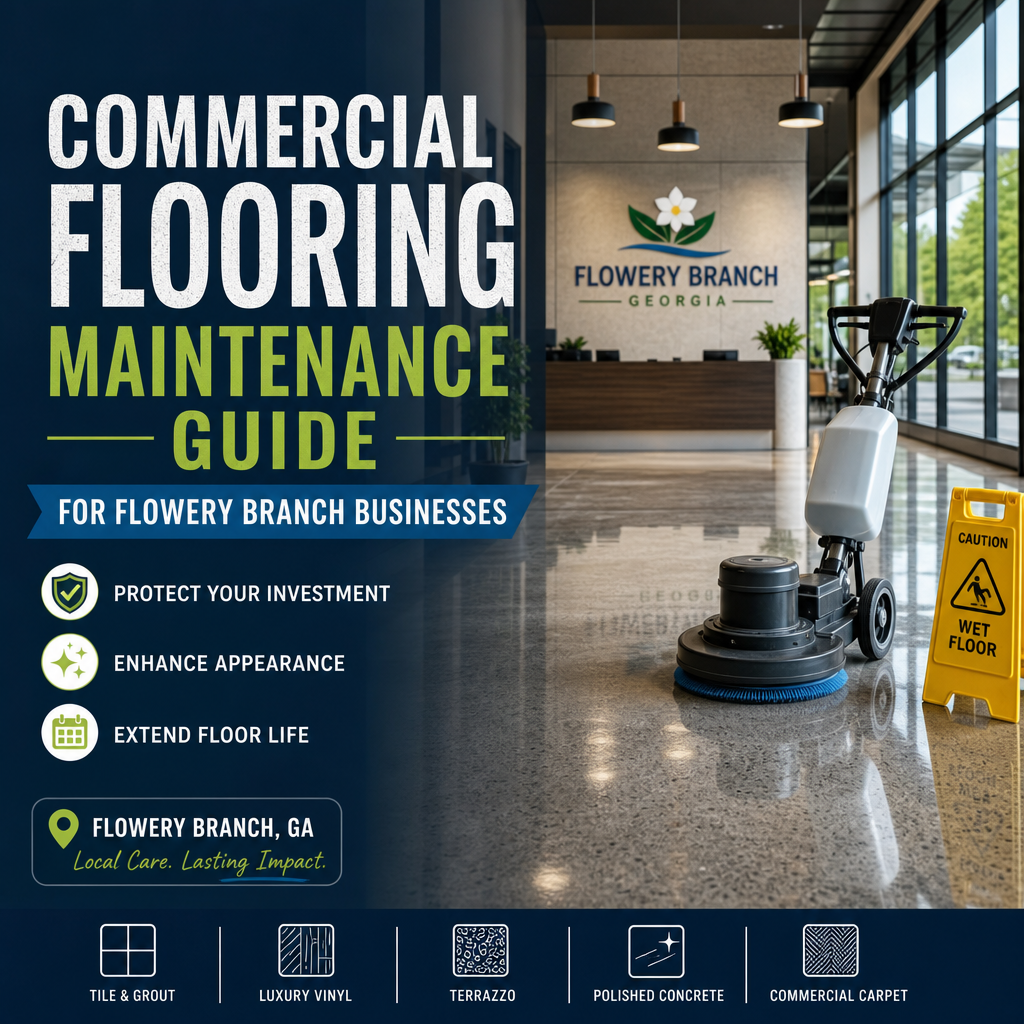
Commercial Flooring Maintenance Guide for Flowery Branch Businesses
A Complete Guide to Commercial Flooring Maintenance for Flowery Branch Businesses
Flooring is one of the first things customers, employees, and visitors notice when they walk into your business. For Flowery Branch businesses, keeping floors clean, safe, and attractive is more than a cosmetic concern—it supports your brand, protects your investment, and helps create a professional environment.
A smart commercial flooring maintenance plan can extend the life of your floors, reduce repair costs, and improve daily operations. Whether your property has tile, carpet, vinyl, hardwood, or polished concrete, routine care makes a major difference.
Why Commercial Flooring Maintenance Matters
Commercial flooring handles far more traffic than residential floors. Offices, retail stores, restaurants, medical spaces, and warehouses all face constant wear from foot traffic, furniture movement, spills, and dirt brought in from outside.
Without consistent maintenance, even durable flooring can quickly show signs of damage, including:
- Scratches and scuffs
- Stains and discoloration
- Cracked grout or loose tiles
- Worn carpet fibers
- Slips and safety hazards
For businesses in Flowery Branch, where weather and seasonal foot traffic can affect indoor surfaces, regular upkeep is especially important. Proper commercial flooring maintenance helps preserve appearance and function while reducing long-term replacement costs.

Know Your Flooring Type
Not every floor should be maintained the same way. The best results come from using care methods designed for the specific material in your building.
Carpet
Commercial carpet collects dirt, dust, and allergens quickly. Vacuuming is essential, but deep cleaning is also needed to remove embedded debris and stains. High-traffic areas may need more frequent attention.
Vinyl and LVT
Luxury vinyl tile and sheet vinyl are popular in commercial spaces because they are durable and low-maintenance. Still, they need regular sweeping, mopping, and periodic refinishing if the manufacturer recommends it.
Tile and Grout
Tile flooring is strong and attractive, but grout lines can trap dirt and moisture. Routine cleaning and sealing help protect the surface and keep it looking clean.
Hardwood
Commercial hardwood flooring adds warmth and elegance, but it is sensitive to moisture and heavy wear. Use appropriate cleaners and avoid excess water during maintenance.
Polished Concrete
Polished concrete is a practical option for many businesses, but it still needs routine dust mopping, damp cleaning, and occasional polishing to maintain its finish.
Daily and Weekly Maintenance Habits
A reliable maintenance plan starts with simple habits performed consistently. These routines can prevent bigger problems later.
Daily Tasks
- Sweep or vacuum to remove debris
- Clean spills immediately
- Place mats at entrances to trap dirt and moisture
- Check for damage, loose tiles, or worn areas
- Keep cleaning products appropriate for the floor type
Weekly Tasks
- Mop floors with the proper cleaner
- Deep vacuum carpeted areas
- Inspect high-traffic zones for extra wear
- Clean baseboards and corners
- Refill supplies such as mats and neutral cleaners
These steps may seem small, but they play a major role in commercial flooring maintenance over time.
Preventive Care Saves Money
One of the biggest mistakes businesses make is waiting until floors look damaged before taking action. Preventive care is usually far less expensive than full repair or replacement.
A few ways to prevent damage include:
- Using protective pads under furniture
- Rotating mats in high-traffic areas
- Restricting harsh chemicals
- Training staff on proper cleaning methods
- Scheduling periodic professional inspections
For Flowery Branch businesses with customer-facing spaces, preventive maintenance also helps maintain a polished look that reflects well on the company.
When to Schedule Professional Maintenance
While in-house cleaning is important, professional services provide a deeper level of care. Commercial flooring experts can assess wear patterns, use specialized equipment, and apply treatments that extend the life of your flooring.
Professional maintenance may include:
- Carpet extraction and stain removal
- Strip and wax services
- Grout cleaning and sealing
- Floor buffing and polishing
- Repairs for damaged sections
A professional can also help you build a maintenance schedule based on traffic levels, flooring type, and business needs. This is especially useful for busy environments such as restaurants, healthcare facilities, and retail locations.
Tailor Your Plan to Your Business
The right commercial flooring maintenance plan depends on how your space is used. A quiet office will not need the same routine as a high-traffic storefront or warehouse.
Consider these factors:
- Number of daily visitors
- Type of flooring in each area
- Exposure to dirt, moisture, or spills
- Hours of operation
- Safety requirements for employees and guests
For example, a medical office may prioritize sanitation and slip prevention, while a retail space may focus on appearance and entrance cleanliness. Customizing your approach helps you get the best results.
Final Thoughts
Commercial flooring maintenance is an essential part of running a clean, professional, and safe business. For Flowery Branch businesses, a consistent plan can reduce damage, improve customer impressions, and protect your flooring investment for years to come.
By understanding your flooring type, sticking to daily and weekly routines, and bringing in professionals when needed, you can keep your floors in excellent condition with less stress and fewer unexpected costs.