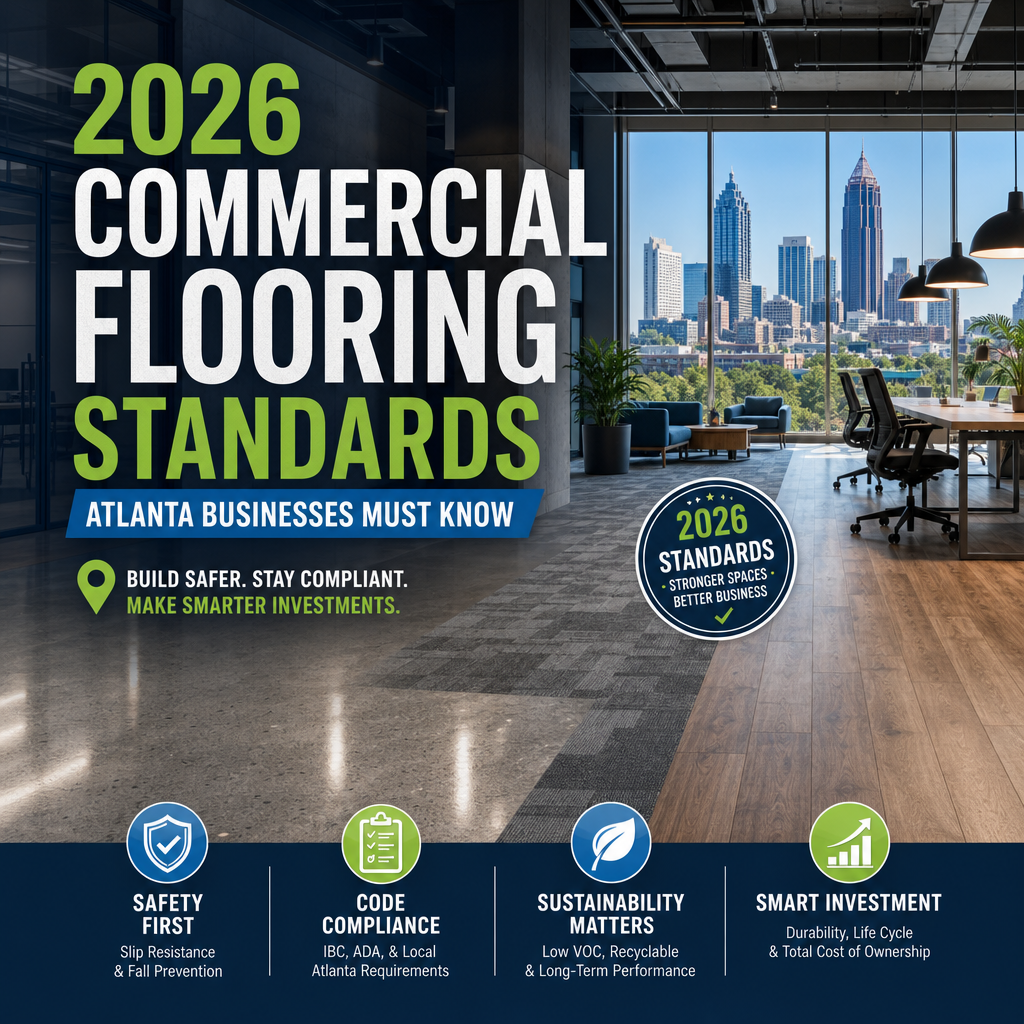
2026 Commercial Flooring Standards Atlanta Businesses Must Know
The 2026 Commercial Flooring Standards Every Atlanta Business Must Know
Commercial flooring is no longer just a design choice. In 2026, it is a business decision that affects safety, accessibility, maintenance costs, energy use, and even how customers perceive your brand. For Atlanta businesses, the stakes are even higher because of heavy foot traffic, humid summers, and a wide mix of office, retail, hospitality, and healthcare spaces.
If you are planning a renovation or opening a new location, understanding the 2026 commercial flooring standards can help you avoid costly mistakes and keep your property compliant, durable, and attractive.
Why flooring standards matter in 2026
Flooring standards exist to make commercial spaces safer and more functional. In 2026, businesses are expected to think beyond appearance and focus on performance under real conditions.
That means choosing materials that can handle:
- High foot traffic
- Moisture and humidity
- Slip-and-fall risk
- ADA accessibility requirements
- Fire and indoor air quality expectations
- Long-term maintenance needs
For Atlanta businesses, flooring must also stand up to seasonal weather shifts, frequent cleaning, and the demands of mixed-use spaces.
Accessibility and ADA compliance remain essential
One of the most important parts of commercial flooring compliance is accessibility. Flooring surfaces should support smooth movement for wheelchairs, walkers, carts, and strollers.
Key accessibility considerations
- Surfaces should be stable and slip-resistant
- Transitions between flooring materials should be minimal
- Carpeting should have low pile and secure backing
- Thresholds and edge changes should not create tripping hazards
In 2026, businesses are paying closer attention to universal design. That means choosing flooring that works for everyone, not just meeting the minimum requirement.
Slip resistance is a top priority
Slip-and-fall incidents remain one of the most common liability risks in commercial spaces. In Atlanta, where rain and humidity can track moisture indoors, slip resistance is especially important.
When evaluating flooring, look for materials with strong traction in both dry and wet conditions. This matters most in:
- Entryways
- Restrooms
- Kitchen areas
- Lobby spaces
- Healthcare and senior care facilities
Floor finishes and coatings also matter. A beautiful floor is not worth much if it becomes slick after mopping or during rainy weather.
Moisture resistance is critical in Atlanta
Atlanta’s climate can create flooring problems if materials are not chosen carefully. High humidity and sudden rain can cause warping, buckling, mold growth, and adhesive failure.
Best practices for moisture control
- Test subfloors before installation
- Use moisture barriers when needed
- Choose water-resistant or waterproof materials in high-risk areas
- Maintain proper HVAC and humidity levels indoors
This is especially important for restaurants, medical offices, fitness centers, and ground-level retail spaces. In 2026, moisture testing before installation is becoming a standard step rather than an optional one.
Durability and lifecycle value matter more than upfront cost
The cheapest flooring option is not always the most cost-effective. Businesses in Atlanta are increasingly comparing flooring by lifecycle value, not just installation price.
A durable floor can reduce:
- Repair costs
- Cleaning time
- Replacement frequency
- Business disruption during renovations
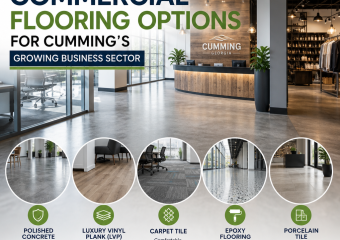
Materials such as luxury vinyl tile, polished concrete, porcelain tile, and certain commercial carpets continue to perform well in busy environments. The right choice depends on your industry, traffic levels, and aesthetic goals.
Sustainability is shaping flooring decisions
Sustainability is one of the biggest commercial flooring trends for 2026. Many Atlanta businesses now want products with lower environmental impact and better indoor air quality.
What to look for
- Low-VOC materials and adhesives
- Recycled content
- Responsible manufacturing certifications
- Long product lifespans
- Recyclable or reusable flooring systems
Sustainable flooring is not only good for the environment. It can also support healthier indoor air, which matters in offices, schools, and healthcare settings.
Fire safety and material ratings still matter
Commercial flooring must also align with fire safety expectations. Different building types may require specific performance ratings, especially in corridors, exits, and high-occupancy areas.
Business owners should confirm that flooring products meet the right fire classification standards for their property type. This is particularly important in hotels, apartment amenity spaces, and large office buildings.
Maintenance should be part of the standard
In 2026, flooring standards are not just about installation. They also include long-term maintenance planning. A floor that requires specialized cleaning products or frequent refinishing may not be the best choice for a busy Atlanta business.
Ask these questions before buying
- How often will the floor need to be cleaned?
- What products are approved for maintenance?
- Can the flooring be repaired in sections?
- How will it look after years of daily use?
The right flooring should support your operations, not slow them down.
Final thoughts
The 2026 commercial flooring standards every Atlanta business must know are about more than compliance. They are about protecting customers, employees, and your investment.
The best commercial flooring today must be:
- Safe
- Accessible
- Moisture-resistant
- Durable
- Sustainable
- Easy to maintain
Whether you manage an office, retail store, restaurant, or healthcare facility, choosing flooring with these standards in mind can save money and reduce risk over time. In a competitive market like Atlanta, that kind of smart planning makes a real difference.