
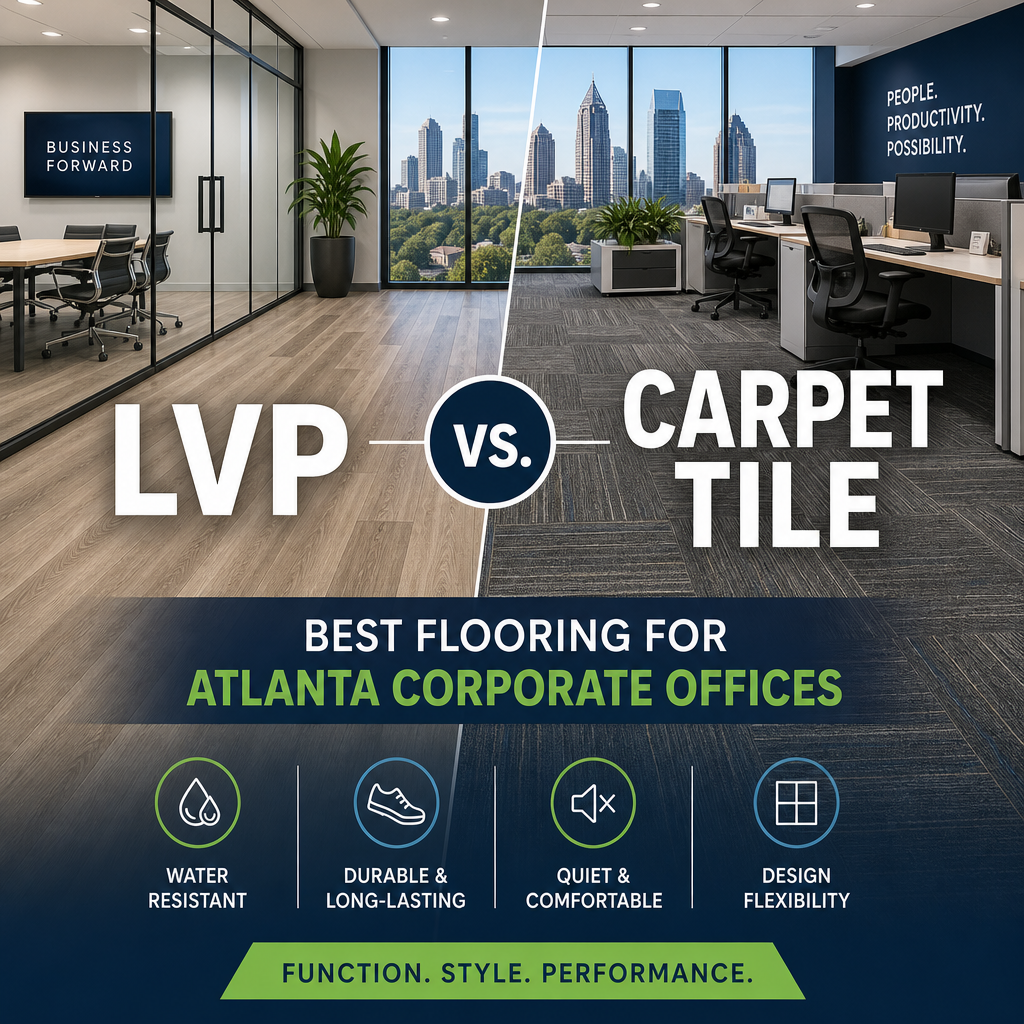
LVP vs. Carpet Tile: Best Flooring for Atlanta Corporate Offices
LVP vs. Carpet Tile: What Works Best for Atlanta Corporate Offices?
Choosing the right flooring for a corporate office is more than a design decision. In Atlanta, where businesses balance client impressions, employee comfort, and daily wear, the floor has to perform on multiple levels. When comparing LVP vs. carpet tile, the best choice depends on your office’s layout, traffic patterns, and branding goals.
Both options are popular in commercial spaces, but they deliver very different benefits. Here’s how they stack up for Atlanta corporate offices.
Why Flooring Matters in Atlanta Offices
Atlanta offices deal with a mix of conditions that affect flooring performance:
- Heavy foot traffic in lobbies and corridors
- Conference rooms that need a polished, professional look
- Open office areas where sound control matters
- Frequent cleaning and maintenance needs
- Seasonal humidity and temperature shifts
Because of these demands, office flooring needs to be durable, easy to maintain, and attractive enough to support the company image.
What Is LVP?
Luxury vinyl plank, or LVP, is a resilient flooring option designed to mimic the look of hardwood or stone. It’s known for its durability, water resistance, and modern appearance.

In corporate settings, LVP is often used in:
- Reception areas
- Hallways
- Break rooms
- Private offices
- High-traffic common spaces
Its sleek look makes it a strong option for businesses that want a polished, upscale feel without the maintenance concerns of natural wood.
What Is Carpet Tile?
Carpet tile is made up of modular carpet squares that can be installed in a variety of patterns. It remains a staple in office environments because it offers comfort, sound absorption, and design flexibility.
Carpet tile is commonly used in:
- Open work areas
- Meeting rooms
- Executive offices
- Collaboration spaces
- Areas where noise reduction is important
If your office has a lot of employees working in close quarters, carpet tile can help create a quieter and more comfortable environment.
LVP vs. Carpet Tile: Key Differences
1. Durability
LVP is highly durable and resists scratches, dents, and spills. That makes it a strong choice for areas with rolling chairs, heavy furniture, or constant foot traffic.
Carpet tile also performs well, but it tends to show wear more quickly in very busy areas. The advantage is that individual tiles can be replaced if one section gets damaged or stained.
Best for durability: LVP in high-traffic zones; carpet tile in moderate-traffic office spaces.
2. Noise Control
One of the biggest advantages of carpet tile is sound absorption. In open offices, it helps reduce echo and footstep noise, which can improve focus and comfort.
LVP is harder underfoot and can reflect sound unless paired with acoustic underlayment or area rugs. For offices where noise is already a challenge, this is an important consideration.
Best for acoustics: Carpet tile.
3. Maintenance
LVP is easy to clean. Regular sweeping and occasional mopping are usually enough to keep it looking good. For offices that want a low-maintenance flooring solution, this is a major plus.
Carpet tile requires more frequent vacuuming and spot cleaning. It can also trap dust and allergens, which may matter in workplaces focused on indoor air quality.
Best for maintenance: LVP.
4. Appearance and Branding
LVP creates a clean, modern look that works well in contemporary office designs. It can also mimic wood or stone, which gives corporate spaces a more upscale appearance.
Carpet tile offers more flexibility in color, pattern, and texture. That makes it useful for branding, wayfinding, and creating visual interest across different office zones.
Best for design flexibility: Carpet tile.
5. Comfort
Carpet tile is softer and warmer underfoot, which makes it ideal for employees who spend long hours standing or walking on the floor. It can help make an office feel more inviting.
LVP is firmer, though it can still feel comfortable when paired with the right underlayment. In shared spaces and public areas, it delivers a professional feel without sacrificing practicality.
Best for underfoot comfort: Carpet tile.
Which Flooring Works Best in Atlanta Corporate Offices?
The answer often depends on how the space is used. In many Atlanta corporate offices, the best solution is not choosing one over the other, but using both strategically.
LVP Works Best For:
- Reception areas
- Entrances
- Corridors
- Break rooms
- Spaces exposed to moisture or heavy wear
Carpet Tile Works Best For:
- Open workspaces
- Conference rooms
- Executive offices
- Collaborative areas
- Noise-sensitive environments
A mixed flooring plan can help offices get the best of both worlds: the durability and easy maintenance of LVP, plus the comfort and acoustic benefits of carpet tile.
Final Thoughts
When comparing LVP vs. carpet tile for Atlanta corporate offices, there is no universal winner. LVP shines in durability, appearance, and maintenance, while carpet tile stands out for comfort and sound control.
For many businesses, the smartest approach is a balanced one. Use LVP where performance matters most, and carpet tile where employees need warmth, quiet, and comfort. That way, your office flooring supports both productivity and professionalism.