How Proper Floor Prep Saves Atlanta Businesses Thousands in Repairs
How Proper Floor Prep Saves Atlanta Businesses Thousands in Repairs
For Atlanta businesses, flooring is more than a surface to walk on. It affects safety, appearance, and how long your investment lasts. Whether you manage a retail store, office, warehouse, restaurant, or medical facility, one thing is true: proper floor prep can save thousands of dollars in avoidable repairs.
Too often, business owners focus on the finished floor and overlook the work that happens before installation. But the prep stage is where long-term performance begins. When the subfloor is not cleaned, leveled, repaired, or tested correctly, small problems turn into expensive headaches later.
Why Floor Prep Matters More Than Most Businesses Realize
A floor may look strong on day one, but if the base underneath is unstable, the system will fail faster than expected. Poor floor prep can lead to:
- Cracking
- Uneven surfaces
- Loose tiles or planks
- Adhesive failure
- Moisture damage
- Premature wear
These problems can disrupt operations and require costly repairs far sooner than planned. In a busy city like Atlanta, where many businesses operate on tight schedules and can’t afford long shutdowns, a flooring issue can become an expensive operational problem.
The Hidden Cost of Skipping Prep
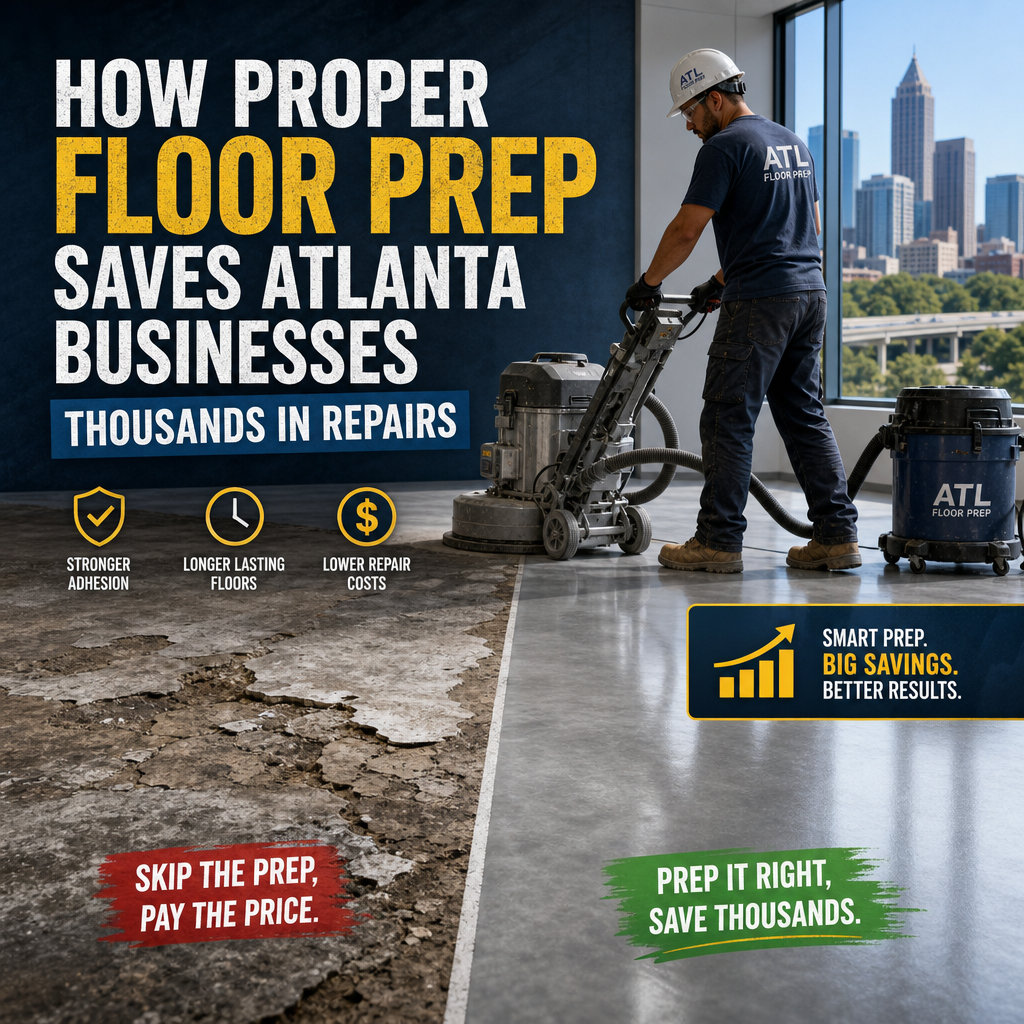
Many business owners think skipping prep saves money upfront. In reality, it often increases total project cost.

A poorly prepared floor may need:
- Patch repairs
- Reinstallation
- Early replacement
- Damage control for surrounding materials
- Temporary business interruption
Those costs add up quickly. What looks like a minor shortcut at installation can turn into a major expense within months.
Common Floor Problems in Atlanta Commercial Spaces
Atlanta’s climate creates specific challenges for commercial flooring. Humidity, temperature changes, and moisture can affect the condition of concrete and other subfloors. If these issues are not addressed before installation, the flooring system may not hold up.
Moisture Issues
Moisture is one of the biggest threats to commercial floors. Concrete slabs can retain moisture, especially in older buildings or during humid seasons. Without proper testing and moisture mitigation, adhesives may fail and flooring materials may warp or lift.
Uneven Subfloors
Heavy foot traffic, equipment, and general building wear can cause dips, cracks, and uneven areas. These imperfections may seem minor, but they put stress on the new floor. Over time, this leads to damage that could have been prevented with leveling and repair work.
Surface Contamination
Dust, grease, old adhesive, and debris can prevent flooring materials from bonding correctly. In restaurants, warehouses, and industrial facilities, surface contamination is a common issue. Proper cleaning and preparation create a solid base for long-lasting results.
How Proper Floor Prep Protects Your Budget
Investing in floor prep is really an investment in durability. A well-prepared floor reduces maintenance costs, extends the life of the flooring system, and helps prevent emergency repairs.
Longer Floor Lifespan
When flooring is installed on a stable, clean, and dry surface, it lasts longer. That means fewer replacements and less frequent repair work. For businesses, this translates into better long-term value.
Fewer Service Interruptions
Floor damage often interrupts business operations. Slippery surfaces, cracked tiles, or loose sections can create safety hazards and force areas to close. Proper prep helps avoid these disruptions, protecting both employees and customers.
Lower Liability Risk
A damaged floor is more than an inconvenience. It can create trip hazards and increase the risk of accidents. For Atlanta businesses, reducing these hazards means lower liability exposure and fewer potential claims.
What Proper Floor Prep Includes
Every commercial flooring project should start with a detailed inspection and prep plan. Depending on the condition of the space, proper floor prep may include:
- Moisture testing
- Crack repair
- Surface grinding or shot blasting
- Debris and adhesive removal
- Subfloor leveling
- Concrete patching
- Priming or sealing
Each of these steps helps the final flooring perform as designed. Skipping even one can compromise the entire system.
The Value of Professional Assessment
A professional flooring contractor can identify hidden issues before they become expensive problems. This is especially important in older Atlanta buildings, where subfloor conditions may not be obvious at first glance.
An experienced team knows how to spot:
- Structural weak points
- Moisture risks
- Surface irregularities
- Material compatibility concerns
That kind of early detection can prevent major repair bills later.
Real Savings Come from Prevention
The biggest money-saving benefit of proper floor prep is simple: it prevents problems before they start. Instead of paying for repairs, downtime, and replacements, businesses can enjoy a floor that performs reliably for years.
For Atlanta business owners, that means more predictable maintenance costs and fewer surprises. In a competitive market, protecting your facility budget matters.
Final Thoughts
Proper floor prep may not be the most visible part of a flooring project, but it is one of the most important. For Atlanta businesses, it can mean the difference between a floor that lasts and one that fails early.
By investing in proper floor prep from the start, you reduce repair costs, avoid operational disruptions, and protect the long-term value of your property. In the end, a strong floor begins with a strong foundation.