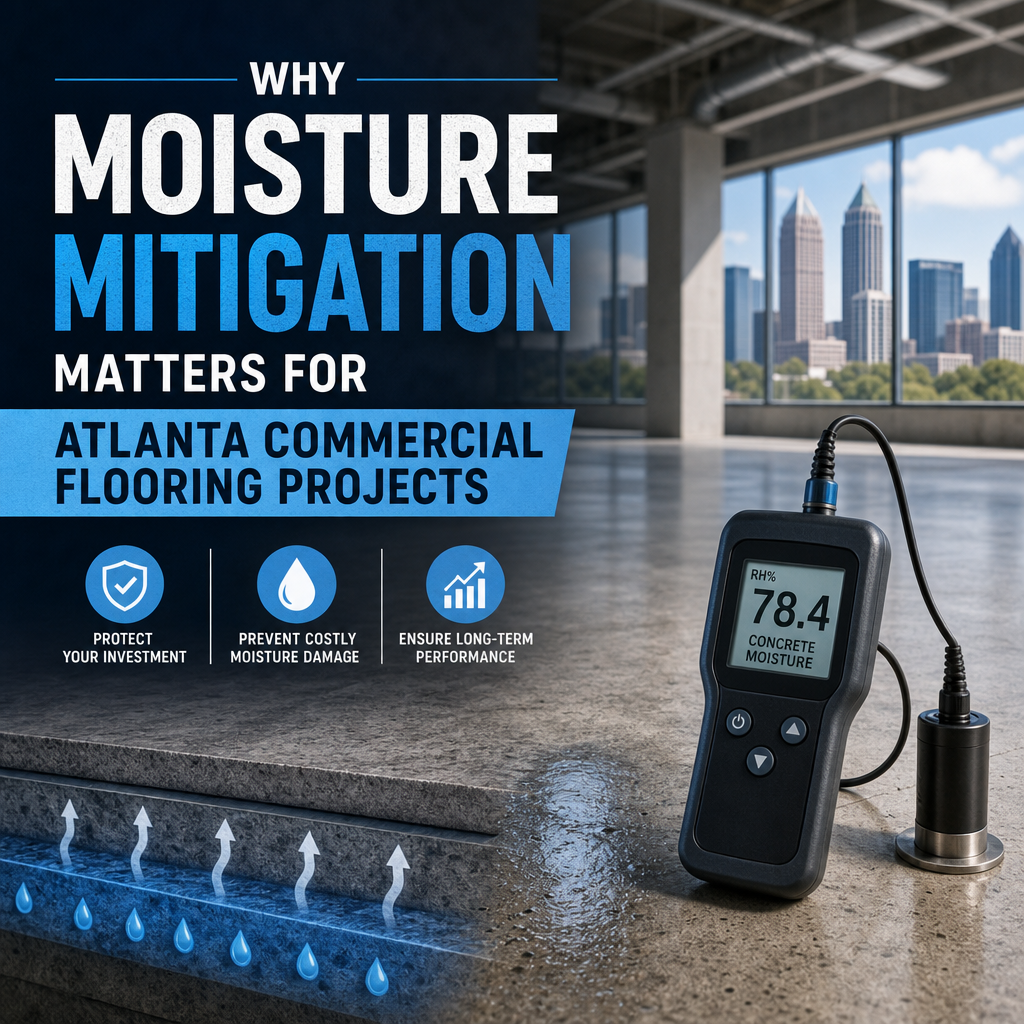
Why Moisture Mitigation Matters for Atlanta Commercial Flooring Projects
Why Moisture Mitigation Is Critical for Atlanta Commercial Flooring Projects
Atlanta’s climate creates a unique challenge for commercial flooring. Between high humidity, seasonal rain, and temperature swings, moisture can become one of the biggest threats to a successful installation. That is why moisture mitigation is not just a precaution—it is a critical step in protecting the performance, appearance, and lifespan of commercial floors.
For property owners, contractors, and facility managers, understanding this process can help prevent costly repairs, project delays, and premature flooring failure.
Atlanta’s Climate Makes Moisture a Constant Concern
Atlanta experiences long stretches of humidity, warm weather, and frequent rain. Those conditions can affect concrete slabs both during construction and long after a building is completed.
Even if a slab looks dry on the surface, moisture can still move upward from within the concrete. This hidden moisture often becomes a problem once new flooring is installed. Materials like vinyl, carpet tile, hardwood, and certain adhesives are especially sensitive to excess moisture.
Common moisture sources in commercial buildings
- Humidity in the air
- Rainwater intrusion during construction
- Ground moisture moving through slabs
- Poor ventilation in enclosed spaces
- Plumbing leaks or condensation issues
Because these factors are so common in Atlanta, moisture testing and mitigation should be standard practice on commercial projects.
What Happens When Moisture Is Ignored?
Skipping moisture mitigation may seem like a way to save time or money, but it often leads to much larger expenses later. Excess moisture can compromise both the flooring system and the building environment.
Potential problems include:
- Adhesive failure
- Flooring cupping, buckling, or warping
- Mold and mildew growth
- Stains or discoloration
- Soft spots or bubbling in flooring
- Odors and poor indoor air quality
- Early replacement costs
In commercial spaces, these issues can create downtime, disrupt operations, and damage a business’s reputation. For schools, healthcare facilities, offices, and retail spaces, flooring failure is more than an inconvenience—it can become a liability.
Why Moisture Mitigation Protects Project Investments
Commercial flooring is a major investment. Materials, labor, and downtime all add up quickly. Moisture mitigation helps protect that investment by creating a stable foundation before the flooring is installed.
When a slab is properly tested and treated, the flooring system has a much better chance of performing as designed. That means fewer call-backs, fewer warranty disputes, and a longer service life for the floor.
Key benefits of moisture mitigation
- Extends the lifespan of flooring materials
- Reduces installation failures
- Improves bond strength for adhesives
- Supports healthier indoor environments
- Helps keep projects on schedule
- Lowers long-term maintenance costs
In a competitive market like Atlanta, building owners want durable, low-maintenance solutions. Moisture mitigation supports those goals from the start.
The Role of Moisture Testing Before Installation
Before any commercial flooring project begins, the slab should be tested for moisture levels. This step helps determine whether additional treatment is needed and what type of flooring system is appropriate.
Common testing methods may include:
- Relative humidity testing
- Calcium chloride testing
- Surface pH testing
- Visual inspection for visible damage or leaks
These tests give contractors and owners a clearer picture of the slab’s condition. More importantly, they help avoid guesswork. A floor that appears ready may still hold enough moisture to cause serious problems later.
How Moisture Mitigation Works
Moisture mitigation systems are designed to block or reduce the movement of moisture through concrete slabs. The right solution depends on the site conditions, flooring type, and project goals.
Typical mitigation methods include:
- Moisture control primers
- Epoxy-based vapor barriers
- Surface preparation and slab repairs
- Sealers designed for concrete protection
- Improved site drainage and ventilation
In many Atlanta commercial flooring projects, epoxy mitigation systems are used because they create a durable barrier between the slab and the finished floor. When applied correctly, they can greatly improve the success of the installation.
Choosing the Right Flooring Partner Matters
Not every flooring contractor approaches moisture the same way. For commercial projects in Atlanta, it is important to work with a team that understands both local climate conditions and the technical requirements of the flooring system.
A qualified flooring partner should be able to:
- Perform proper moisture testing
- Recommend the right mitigation strategy
- Prepare the slab correctly
- Match the mitigation system to the flooring material
- Document results for warranty and project records
This level of attention is especially important in large or high-traffic facilities where flooring failure would be expensive and disruptive.
Planning Ahead Saves Time and Money
One of the biggest mistakes in commercial flooring is treating moisture as an afterthought. By addressing it early, project teams can avoid delays, reduce risk, and install flooring with greater confidence.
In Atlanta, where moisture pressure is part of the environment, mitigation is not optional. It is a smart, proactive step that helps commercial floors perform better from day one.
Final Thoughts
Moisture can quietly undermine even the best commercial flooring project if it is not properly managed. In Atlanta, where humidity and weather create ideal conditions for slab moisture issues, moisture mitigation is essential for long-term success.
From testing and preparation to protective systems and proper installation, every step matters. When moisture is controlled, commercial flooring is more likely to stay durable, attractive, and safe for years to come.