
Hidden Costs of Flooring Replacement in Clinics
Maintaining a medical clinic requires careful attention to patient care, hygiene, and safety. One crucial detail that often gets overlooked is the condition of the flooring. While replacing flooring may seem costly and disruptive, delaying the work can lead to hidden expenses and risks that affect the clinic’s day-to-day operations.
In this article, we explore the hidden costs of postponing flooring replacement in medical clinics and why timely action matters.
Why Flooring Matters in Medical Clinics
Flooring in medical clinics is more than a decorative element—it plays a vital role in:
- Infection control: Flooring materials must be easy to clean and disinfect.
- Patient and staff safety: Proper flooring reduces slip and fall incidents.
- Durability: Flooring endures high foot traffic, medical equipment, and frequent cleaning with harsh chemicals.
- Aesthetics and comfort: A welcoming environment can reduce patient anxiety and improve clinic reputation.
Given these roles, compromised flooring can jeopardize clinic operations in significant ways.
The Hidden Costs of Delaying Flooring Replacement
1. Increased Risk of Infection
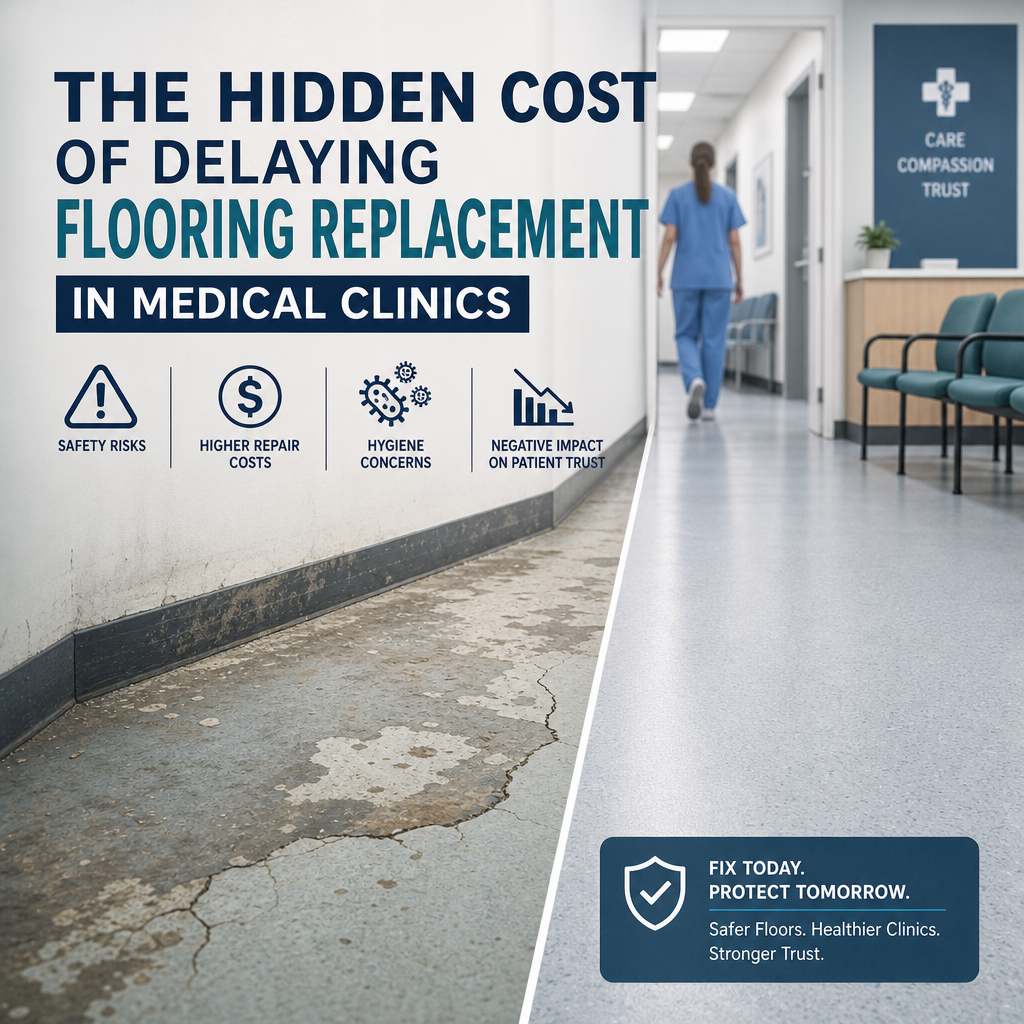
Medical clinics are highly susceptible to the spread of infections, and flooring conditions contribute directly to this risk. Worn-out or damaged floors develop cracks, crevices, and porous areas where bacteria, viruses, and microbes can accumulate. Over time, this microbial build-up becomes harder to clean, undermining infection control protocols.

Hidden cost: Higher chances of healthcare-associated infections (HAIs) can result in legal liabilities, patient distrust, and increased sanitation expenses.
2. Safety Hazards and Liability
Damaged or uneven flooring increases the likelihood of slips, trips, and falls. Patients with mobility challenges, elderly visitors, and busy healthcare professionals are especially vulnerable. A minor fall can result in serious injuries, leading to costly malpractice claims and increased insurance premiums.
Hidden cost: Potential legal and insurance costs, plus lost productivity due to staff injury.
3. Higher Maintenance and Cleaning Costs
As flooring ages beyond its functional lifespan, maintenance becomes more frequent and intensive. Repairs, spot treatments, and specialized cleaning consume valuable staff time and financial resources, diverting them from other priorities.
Hidden cost: Ongoing maintenance expenses that accumulate and eventually surpass the cost of replacement.
4. Negative Impact on Patient Experience and Clinic Reputation
The visual appearance and feel of clinic flooring can subconsciously influence patient perceptions of care quality. Unsightly or damaged floors may make patients question overall hygiene and professionalism, potentially leading to lower patient satisfaction scores and reduced patient retention.
Hidden cost: Loss of patient trust can harm revenue and hinder growth.
5. Reduced Lifespan of Other Clinic Infrastructure
Flooring interacts with medical carts, chairs, and equipment. Rough or broken floors cause increased wear and tear on this equipment, leading to premature breakdowns and replacement needs.
Hidden cost: Accelerated depreciation of expensive clinic assets.
When to Consider Flooring Replacement
Ideal timing for flooring replacement depends on several factors including:
- Visible damage such as cracks, chips, or warping
- Persistent stains that cannot be removed
- Increased slip incidents linked to flooring
- Changes in clinic function requiring different flooring properties
- Aging flooring beyond manufacturer’s recommended lifespan
Regular inspections help identify these signs early.
Choosing the Right Flooring for Medical Clinics
If it’s time to replace your clinic flooring, choosing the appropriate material is crucial. Some popular options include:
- Vinyl flooring: Durable, easy to clean, and available in antimicrobial varieties
- Rubber flooring: Slip-resistant and comfortable underfoot
- Laminate flooring: Can mimic natural materials while offering easy maintenance
- Epoxy flooring: Seamless and highly resistant to chemicals and stains
Consulting with a flooring specialist who understands healthcare requirements can help you make an informed choice. For more insights on healthcare flooring options, see Why Atlanta Healthcare Facilities Are Switching to Antimicrobial Flooring.
For additional guidance on infection prevention in healthcare settings, review the CDC infection control guidance.
Conclusion: Investing Now Saves More Later
While delaying flooring replacement in medical clinics may seem like a cost-saving decision, the hidden costs—ranging from infection risks to liability and damage to clinic reputation—pose far greater threats. Proactively maintaining safe, clean, and attractive flooring promotes better outcomes for patients and staff alike.
Ultimately, investing in timely flooring replacement not only enhances operational efficiency but also safeguards the well-being of everyone who steps into your clinic. Don’t let hidden costs pile up—prioritize your clinic’s flooring today.