
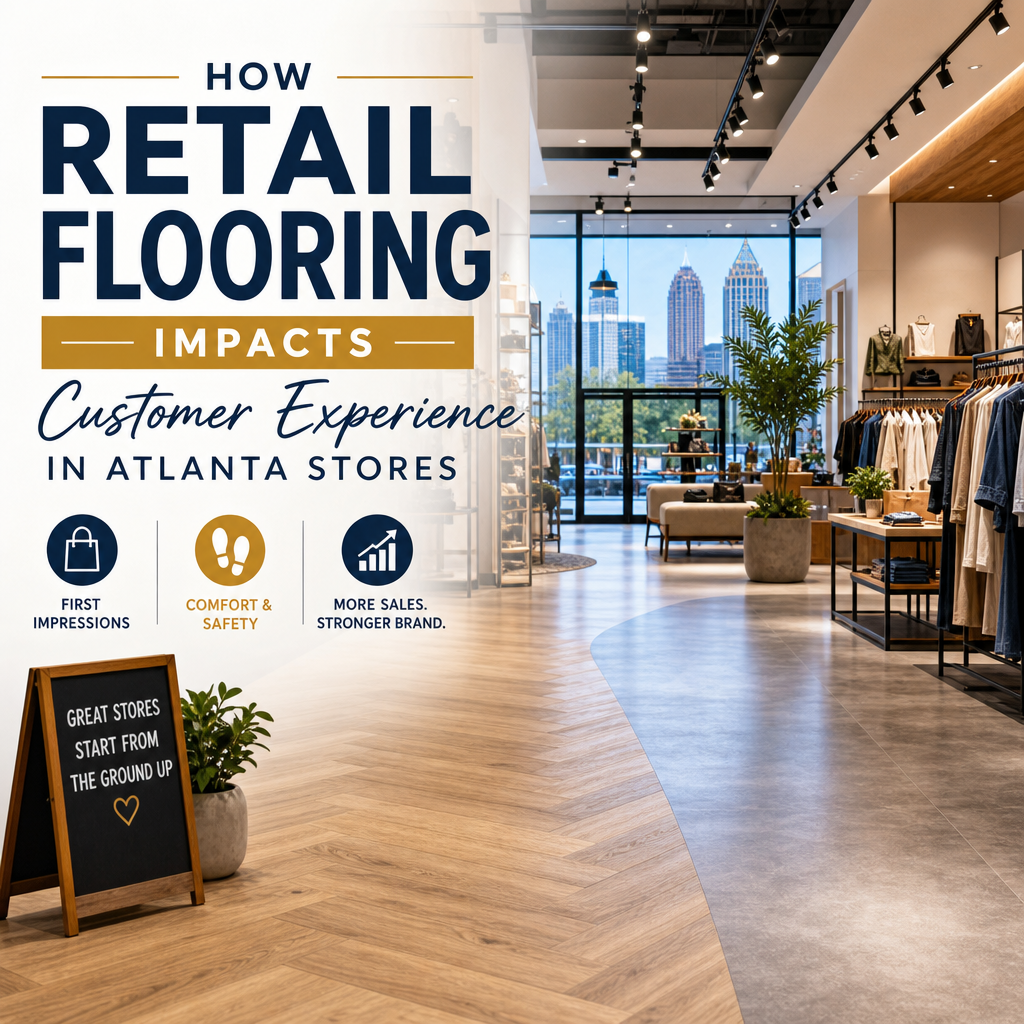
How Retail Flooring Impacts Customer Experience in Atlanta Stores
How Flooring Impacts Customer Experience in Atlanta Retail Stores
In retail, every detail shapes how customers feel the moment they walk in. Lighting, layout, signage, music, and even scent all matter. But one design element often gets overlooked: the floor. The right flooring does more than cover a space. It helps define the shopping experience, supports safety, and influences how long customers stay.
For Atlanta retail stores, flooring plays an especially important role. With busy shopping districts, high foot traffic, and a mix of upscale boutiques, large chains, and specialty shops, store owners need flooring that looks good and performs well.
First Impressions Start at the Ground Level
Customers form opinions quickly. Before they try on clothes, browse shelves, or speak with staff, they notice the store’s atmosphere. Flooring is one of the first visual cues that tells shoppers what kind of business they’re in.
A polished hardwood floor can signal warmth and elegance. Sleek tile may suggest cleanliness and modern design. Durable vinyl can communicate practicality and efficiency. The flooring should match the brand identity and the expectations of the target customer.
In Atlanta’s competitive retail market, that first impression can help determine whether a shopper stays or walks out.

Flooring sets the tone for the brand
The floor helps reinforce the store’s personality. A luxury retailer may use stone or wood-look finishes to create a refined feel. A trendy fashion shop may choose bold patterns or polished concrete for a modern edge. A family-friendly store might prioritize comfort and ease of movement.
When flooring aligns with the brand, customers experience a more cohesive and memorable visit.
Comfort Affects How Long Customers Stay
Customer experience is not just about appearance. It is also about physical comfort. Hard, uneven, or noisy floors can make a store feel less inviting, especially if customers are spending time browsing.
Well-chosen flooring can improve the shopping experience in several ways:
- Reduces foot fatigue for customers who walk through the store for extended periods
- Softens noise to create a calmer environment
- Improves walking comfort for families, older shoppers, and people with mobility concerns
- Makes the store feel cleaner and more pleasant overall
In retail, small comforts often translate into longer visits. And longer visits can lead to more sales.
Safety and Accessibility Matter
A positive customer experience depends on safety. Flooring choices can help prevent accidents and make a store easier to navigate. This is especially important in Atlanta, where retail stores may deal with seasonal rain, tracked-in moisture, and constant traffic from busy sidewalks and parking areas.
Slip-resistant flooring is a smart choice in entryways and high-traffic areas. Smooth transitions between flooring types also help customers move through the store without tripping. For stores that welcome a wide range of shoppers, accessibility should be a top priority.
Key safety considerations
Retail flooring should be:
- Slip-resistant, especially near entrances
- Easy to clean and maintain
- Free of cracks, gaps, or uneven surfaces
- Comfortable for all types of footwear
- Durable enough to handle daily wear
When customers feel safe, they can focus on shopping instead of watching their step.
Cleanliness Shapes Perception
People notice when a store feels clean. Flooring contributes heavily to that impression. Dirty, stained, or worn floors can make even a well-organized retail space seem neglected. On the other hand, clean and well-maintained floors create trust.
This is particularly important in Atlanta, where retail stores often see a steady stream of customers throughout the day. Flooring that resists stains, hides scuffs, and cleans easily helps stores maintain a polished look with less effort.
Different materials offer different advantages. Some options are better at hiding dust and debris, while others are easier to sanitize in busy environments. The best choice depends on the type of store and the amount of traffic it receives.
Flooring Can Guide Customer Flow
Good flooring does more than look attractive. It can also influence how customers move through the store. Visual changes in flooring can help define sections, highlight displays, and direct attention to featured products.
For example:
Use flooring to support store layout
- Contrasting flooring can separate departments
- Pathways can guide shoppers toward key displays
- Consistent flooring can make a small store feel larger
- Accent materials can create focal points in promotional areas
When customers can navigate a store easily, they are more likely to explore, discover products, and enjoy the experience.
Durability Is Essential in Atlanta Retail Spaces
Atlanta retail stores face heavy use. Foot traffic, weather, rolling carts, display changes, and daily cleaning all put stress on floors. If flooring wears down too quickly, it can hurt the customer experience and increase maintenance costs.
Durable flooring helps stores stay attractive longer. It also reduces disruptions caused by repairs or replacements. For busy retailers, that reliability is a major benefit.
Choosing the right material from the start can save time, money, and frustration later.
The Right Flooring Supports Sales
Flooring may not be the first thing customers discuss, but it affects how they feel inside a store. A space that looks clean, feels comfortable, and reflects the brand well is more likely to keep shoppers engaged. That engagement can lead to more browsing, more purchases, and stronger customer loyalty.
For Atlanta retail stores, flooring is more than a design decision. It is part of the overall customer experience. When chosen thoughtfully, it helps create a store that feels welcoming, professional, and worth returning to.
Final Thoughts
How flooring impacts customer experience in Atlanta retail stores comes down to more than style. It affects first impressions, comfort, safety, cleanliness, and store flow. In a city with active retail competition and diverse customer expectations, flooring should be treated as a strategic part of the shopping environment.
The right floor does not just support the store. It supports the entire customer journey.