
Atlanta Retail: How Flooring Enhances Branding and Customer Experience
How Flooring Impacts Branding and Customer Experience in Atlanta Retail
In the dynamic world of retail, every element of store design plays a pivotal role in shaping the brand and influencing the customer experience. Among these elements, flooring stands out as a foundational aspect that can significantly impact how customers perceive a store. In Atlanta, where both traditional southern charm and modern trends meet, the choice of flooring is crucial in defining a retail brand and enhancing customer experience.
Importance of Flooring in Retail Environments
First Impressions Matter
When customers step into a retail space, flooring is one of the first visuals that capture their attention. In a bustling retail hub like Atlanta, where competition is fierce, making an excellent first impression is crucial. The right flooring can create a welcoming atmosphere that resonates with the brand’s values and aesthetics.
Comfort and Functionality
Comfortable flooring can significantly enhance the customer experience, encouraging longer stays and more profound engagement with the products. In contrast, floors that are too hard, slippery, or cold might turn customers away or lead to negative impressions.
Selecting the Right Flooring for Your Atlanta Retail Store
Reflecting Brand Identity
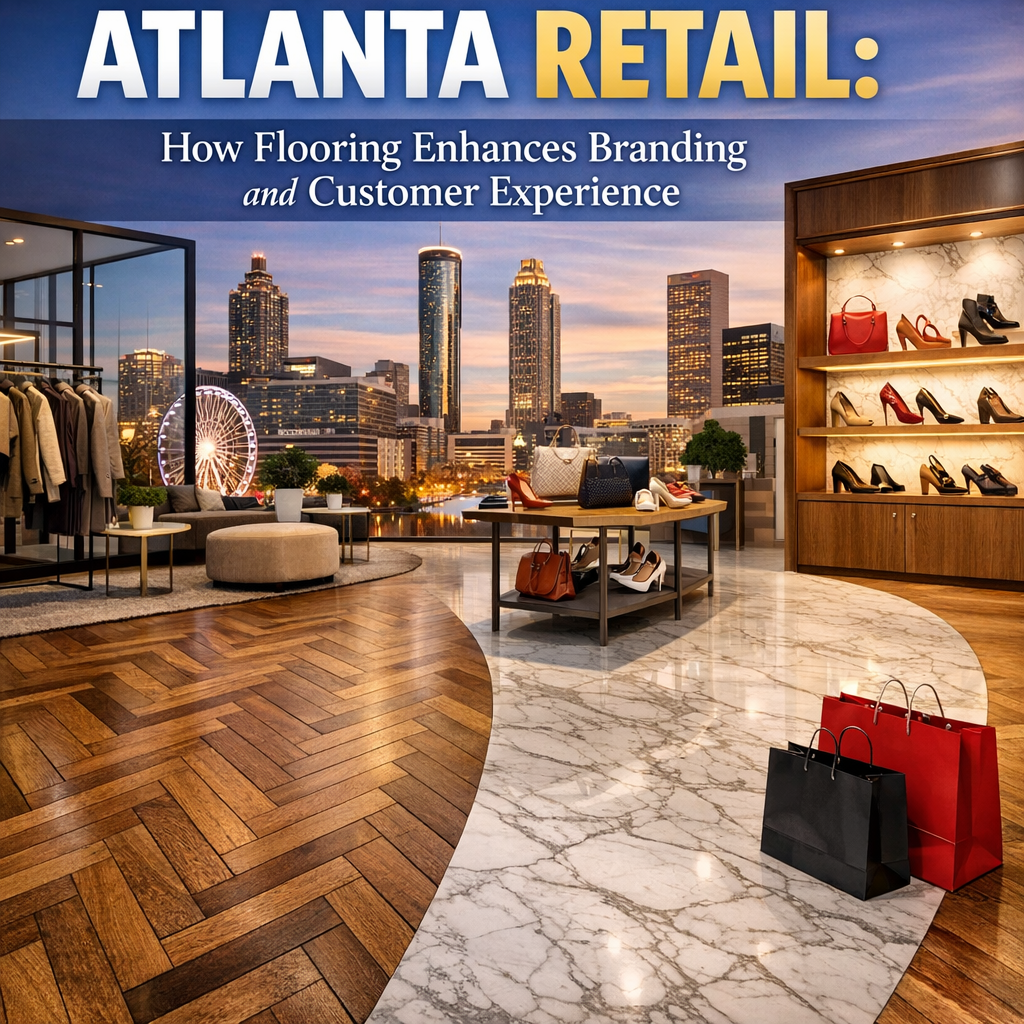
Choosing a flooring material and design that aligns well with your brand identity is essential. For upscale luxury brands, marble or high-quality hardwood floors can emit sophistication and class. Conversely, a vintage store might opt for reclaimed wood or a rustic tile that adds character and warmth, resonating with a more eclectic audience.
Durability and Maintenance
In a high-traffic city like Atlanta, durability is a necessity. Retail floors need to withstand considerable wear and tear without diminishing in appearance. Materials like polished concrete or commercial-grade vinyl can be excellent choices for durability and low maintenance.

Examples of Flooring Impacting Retail Branding in Atlanta
Luxury Boutiques
High-end boutiques often use premium materials like stone or bespoke tile layouts to emphasize luxury and exclusivity, directly impacting the upscale shopping experience and reinforcing the brand’s positioning as elite.
Tech Stores
Modern tech stores favor sleek, minimalist flooring such as polished concrete or metallic epoxy. These materials reflect innovation and cutting-edge technology, syncing perfectly with the gadgets and tech products displayed.
Vintage and Craft Markets
Areas like the Ponce City Market often showcase unique, older-looking floors that align with the artisanal and handcrafted nature of the products sold. This flooring choice helps in creating an authentic, approachable, and rustic environment that attracts a specific customer demographic.
The Role of Flooring in Enhancing Customer Experience
Navigating the Space
The layout and material of flooring can guide customers through the store, subtly influencing their path and interaction with merchandise. Strategic changes in flooring can highlight specific products or lead customers to less explored sections of the store.
Safety and Accessibility
In Atlanta’s climate, where weather can be variable, choosing non-slip, weather-resistant flooring materials is crucial for customer safety and comfort. Ensuring that the flooring is also accessible for people with disabilities enhances inclusivity and promotes a positive brand image.
Conclusion
In the competitive retail market of Atlanta, where every detail counts, flooring emerges as more than just a functional surface. It plays a critical role in branding and customer experience, contributing significantly to the store’s aesthetic appeal, the comfort of shoppers, and the overall atmosphere. Retailers in Atlanta should consider these aspects carefully to choose flooring that not only meets practical needs but also enhances and reflects the brand’s identity, ultimately influencing the customer’s perception and experience.