

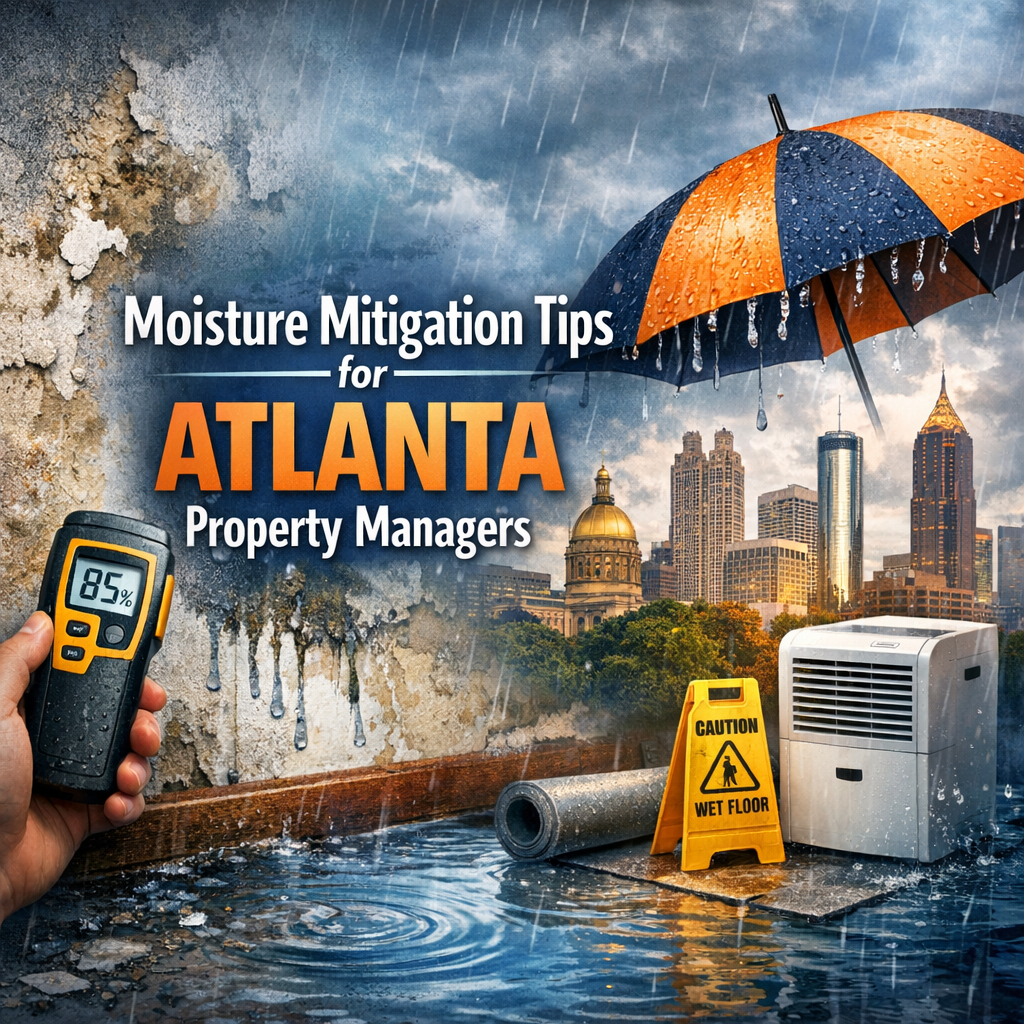
Moisture Mitigation Tips for Atlanta Property Managers
What Atlanta Property Managers Should Know About Moisture Mitigation
Managing property in Atlanta involves contending with the city’s humid subtropical climate, which can contribute significantly to moisture issues within buildings. For property managers, understanding the steps for effective moisture mitigation can prevent costly damages and maintain a healthy environment for occupants. Here’s what you need to know to keep moisture and its related problems at bay.
Understanding the Risks of Moisture
Moisture in buildings can lead to a range of problems from minor annoyances to major structural damages. Here are key risks associated with excessive moisture:
- Mold and Mildew Growth: These can lead to health problems such as allergies and respiratory issues.
- Structural Damage: Moisture can weaken wooden structures leading to long-term damage and costly repairs.
- Pest Infestations: Damp environments attract pests like termites and cockroaches.
- Decreased Indoor Air Quality: Moist environments can increase indoor pollutants.
Effective Moisture Control Strategies
To effectively manage moisture in your properties, consider the following strategies:
Regular Inspections
Conduct regular inspections of your properties to check for signs of moisture accumulation. Look for:
- Water stain on ceilings and walls
- Peeling paint or wallpaper
- Condensation on windows
- Musty odors
Good Building Design and Maintenance
Ensuring that your buildings are well-designed and maintained is crucial for moisture control:

- Roof and Gutters: Keep gutters and downspouts clean to ensure water is effectively diverted away from the building.
- Landscaping: Ensure the landscape slopes away from the building to prevent water pooling around the foundation.
- Ventilation: Improve airflow with vents in kitchens, bathrooms, and basements to reduce humidity levels.
Use of Dehumidifiers and HVAC Systems
In areas prone to high humidity, using dehumidifiers can help maintain healthier moisture levels. Regular maintenance of HVAC systems also ensures they function efficiently to manage air moisture.
Moisture Barriers
Install moisture barriers in crawl spaces, basements, and in walls. Vapor barriers and sealants can prevent moisture from seeping through porous materials.
Educate Tenants
Encourage tenants to contribute to moisture management by:
- Using exhaust fans in bathrooms and kitchens
- Reporting leakage and moisture issues promptly
- Maintaining moderate thermostat settings to reduce indoor humidity
Moister Mitigation Case Studies in Atlanta
Analyzing successful moisture mitigation projects can provide practical insights. Consider these brief examples:
- Downtown Atlanta Commercial Building: Implemented a complete HVAC system overhaul which resulted in a 50% reduction in reported moisture and mold issues after one year.
- Midtown High-Rise Residential: After experiencing widespread mold problems, the management installed dehumidifiers in all common areas and upgraded ventilation systems, seeing a significant improvement in air quality and tenant satisfaction.
Conclusion
Managing moisture effectively is critical for property managers in Atlanta. By implementing thorough inspections, maintaining building infrastructure, utilizing dehumidification strategies, and educating tenants, you can safeguard your properties against moisture-related issues. Remember, proactive moisture mitigation not only preserves the structural integrity of the building but also ensures a healthier living and working environment for all occupants. Keep ahead of moisture problems, and your tenants and your buildings will thank you for it.